
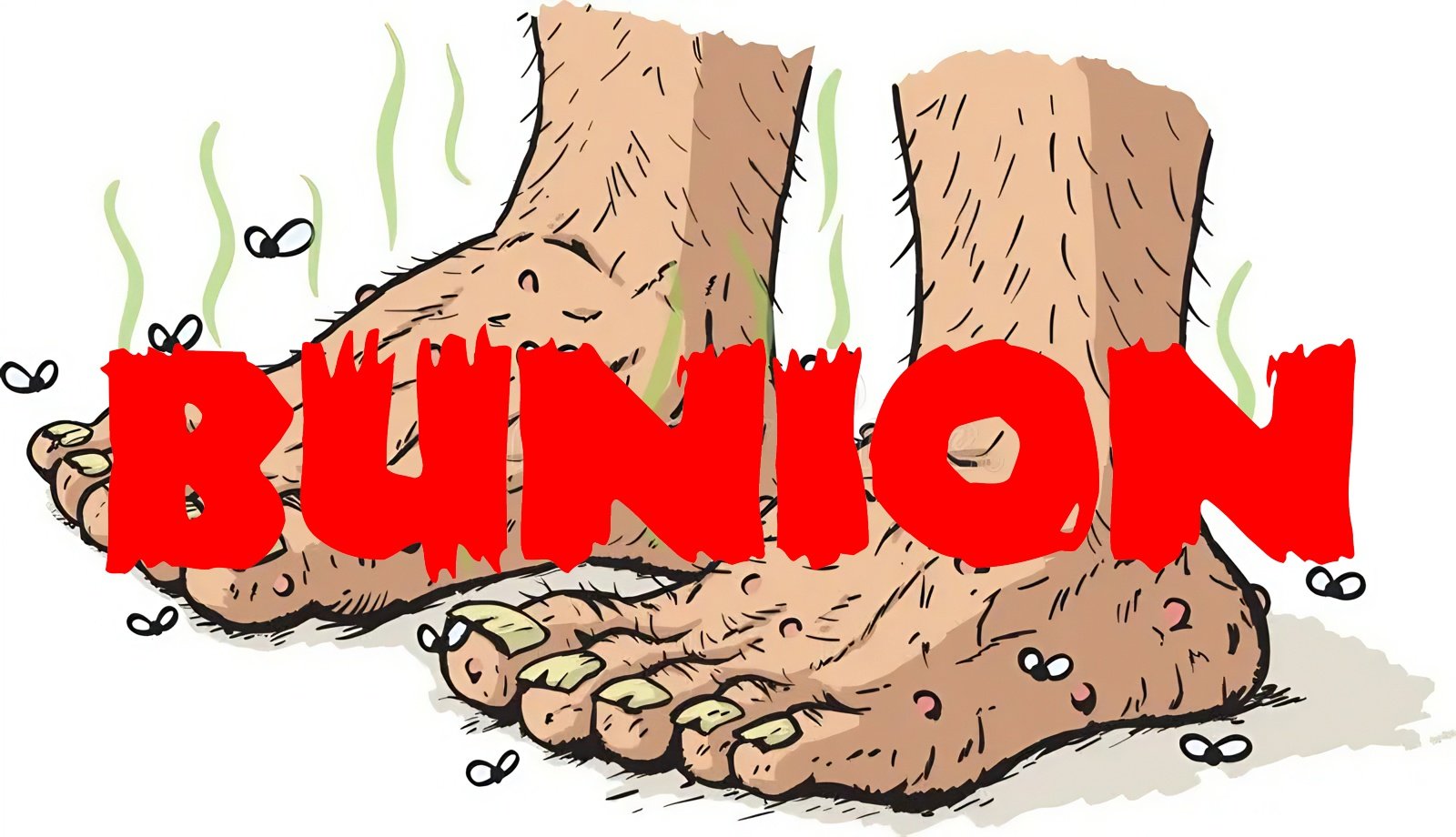
The Hot Spot Rating
Bunion (1979)
Starring: Fonna Pura, Manty Muscles, Silk Sehba, Asim Rizwani
Director: Chaudhry Malik Butt Tondwallah
Synopsis: mysterious deadly virus takes civilization to the brink of extinction
Proceedings begin in the darkest corners of Africa in 1920—The Congo, to be precise—where we are confronted with the putrefying remains of a corpse. Flies buzz enthusiastically around what was once a pair of human legs, now reduced to festering puddles of decaying flesh. It is an opening not entirely dissimilar to the unsettling introduction of The Texas Chain Saw Massacre, with the camera lingering just long enough to make the audience distinctly uncomfortable.
The scene then shifts to a missionary camp where one of the missionaries lies awake amidst the deafening chorus of tropical crickets. Unable to sleep, she makes her way towards the makeshift toilet to answer nature’s call.
No sooner has she settled down to her business than she senses that there is something foul lurking nearby besides the steaming contribution she has just deposited.
Increasingly alarmed by strange, unearthly sounds approaching through the darkness, she has barely enough time to panic before she is violently ripped from the toilet seat and dragged screaming into the night by an unseen assailant.
Business interrupted.
Later, her limp body is hauled away, leaving behind clumps of rotten flesh and putrefying tissue strewn across the ground where she was dragged.
It’s a marvellously unpleasant opening.
From this shock beginning, the action leaps forward to present-day 1979 and some seemingly idyllic London suburbia. Here, a patient arrives at the practice of renowned surgeon Dr Drauce House complaining about a grotesque growth on his foot. The thing appears to be rotting, emitting foul-smelling pus and generally behaving in a manner that feet really shouldn’t.
The doctor conceals his alarm beneath a professional exterior, but it is immediately apparent that this is something rather more sinister than a simple case of athlete’s foot.
We are also introduced to Monique, the doctor’s ageing siren of a wife. Increasingly insecure about her fading beauty, she craves her husband’s attention but receives precious little of it. Dr House, meanwhile, becomes increasingly concerned as the mystery infection begins reminding him of a horrific epidemic he encountered years earlier in the Congo.
As further investigations unfold and the body count begins to rise, the dreadful truth emerges.
The Bacillus Pestis virus has returned.
And this time it intends to finish the job.
The film bears more than a passing resemblance to Outbreak, despite having been made over twenty years earlier. In many respects it feels remarkably ahead of its time, functioning as an accidental allegory for the AIDS crisis and exploring a worst-case scenario in which a deadly epidemic spreads beyond all control.
Back in 1979, Bunion represented the most ambitious production yet to emerge from the Bubonic stable. Much of the budget appears to have been lavished on the make-up effects, which are suitably revolting and frequently stomach-churning.
The performances are also surprisingly strong. Fonna Pura excels as Monique, portraying an insecure woman desperately attempting to cling to her fading youth and relevance. The film’s themes owe an obvious debt to the work of David Cronenberg, particularly Shivers and Rabid, and much of the story unfolds like a grim, hopeless nightmare.
This is not an optimistic film.
The body count mounts steadily, the atmosphere grows increasingly bleak, and the sense of impending doom hangs heavily over every scene. Yet beneath the gore and bodily corruption lurks a surprisingly thoughtful examination of vanity, mortality, disease, and human frailty.
Bunion certainly has its stomach-turning moments and is unlikely to appeal to the faint-hearted. Its gruesome vision of humanity’s future virtually guarantees underground status, but there is an intelligence beneath the low-budget trappings that elevates it above simple exploitation.
The film also takes inspiration from the real-life outbreak of bunions that reportedly plagued parts of the English countryside during the late 1970s, an epidemic largely attributed to ill-fitting shoes. Medical studies suggested that as many as one in four people suffered from footwear-related problems, a statistic which clearly inspired the filmmakers to imagine a considerably more horrifying outcome.
The result is cheesy, low-budget, occasionally ridiculous, yet also dark, disturbing, and unexpectedly thought-provoking.
Fonna Pura delivers what may well be the finest performance of her career. As Monique, she brilliantly portrays a woman whose best years are long behind her, yet who continues to pursue youth with a tragic and increasingly pathetic determination. She drifts through the film dressed in fishnet stockings riddled with enormous holes, towering stilettos, a deranged carrot-top wig, and what can only be described as a trash-chic wardrobe assembled from luxury refuse sacks.
There are also unmistakable undertones of deviant behaviour bubbling beneath the surface, making Monique one of the film’s most fascinating creations.
Bubonic never had a finer performer than the largely unheralded Fonna Pura, and Bunion remains another impressive feather in her cap.
A triumph from the Bubonic stable, a film that accidentally anticipated many of the fears surrounding the AIDS crisis years before they emerged, and perhaps one of the earliest genre efforts to tap into anxieties surrounding deadly Congo-based viral outbreaks long before Ebola became a familiar cinematic obsession.
Cheesy, grotesque, bizarre, and surprisingly intelligent.
Exactly the sort of thing cult cinema was invented for.