
The Hot Spot Rating
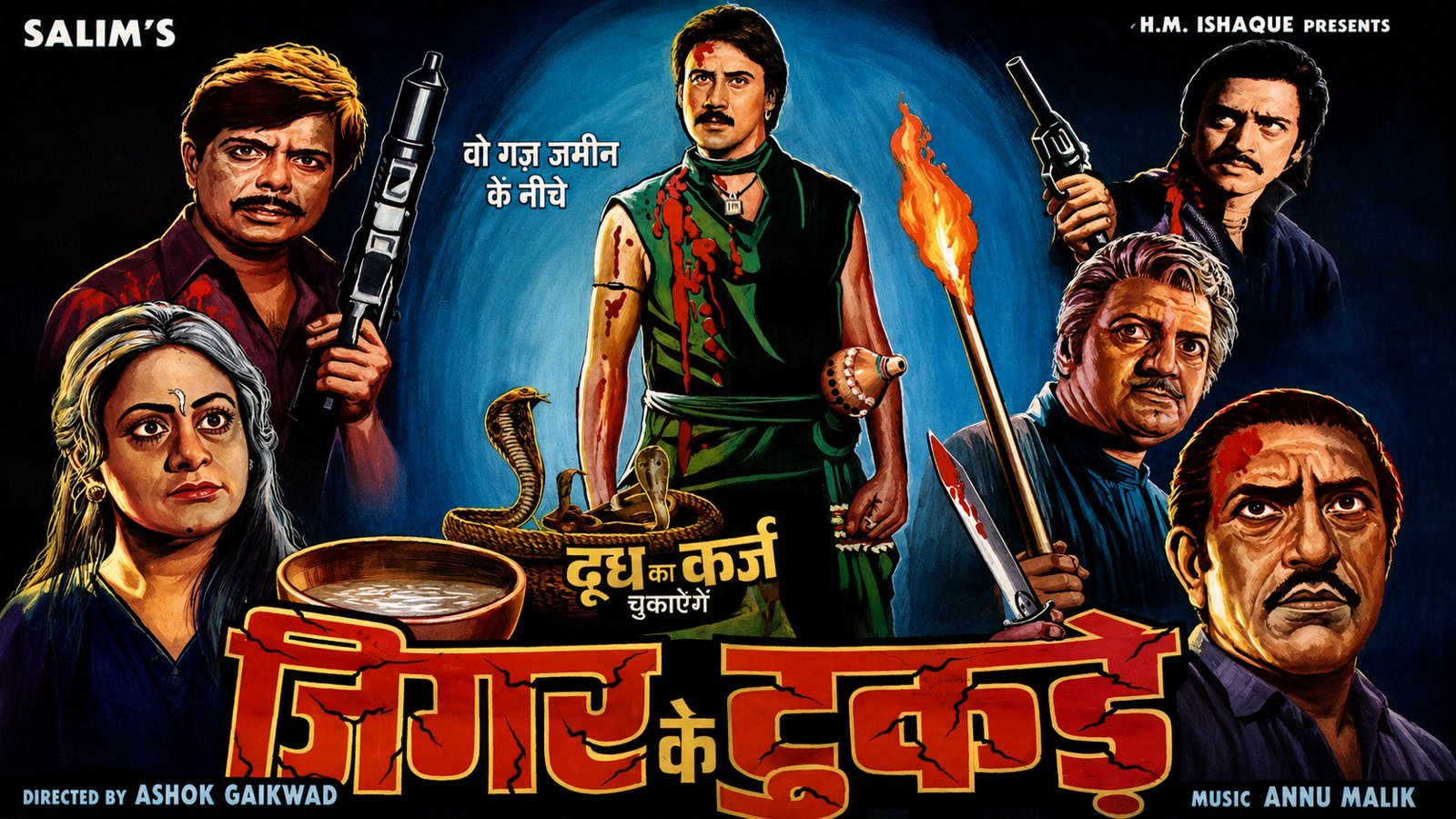
Doodh ka Karz (1990)
Cast: Jackie Shroff, Aruna Irani, Neelam, Amrish Puri, Sadashiv, Prem Chopra
Director: Ashok Gaekwad
Music Director: Jeetu Tapan
Synopsis: Rollicking, old fashioned snake-fest is a blast of slithering nostalgia
This is the sort of vintage, typically Indian fairy tale with a totally indigenous backdrop that sadly seems to have gone out of fashion over the last decade or so as filmmakers and audiences alike have embraced a slicker, more westernised product. The old yarns rooted in local folklore and mythology—snake movies revolving around reincarnation, Ichchadhari Naags and Manidhari serpents—have all but vanished, despite having enjoyed a powerful resurgence during the mid to late 80s. Films such as Sridevi’s Nagina set the box office ablaze and slithered their way to glory while demolishing numerous records along the way. The decade before had seen Reena Roy strike box-office gold with Nagin, one of the biggest hits of the mid-70s.
Nagina was followed by that rare commodity in Bollywood—a sequel. Nigahen: Nagina Part II also performed reasonably well, though by the time it arrived the great snake boom was already beginning to hibernate once more. Then along came Doodh Ka Karz in 1990 and snake movie fans everywhere found themselves swaying in appreciation as the film turned into a success, particularly in the rural centres where audiences invariably preferred home-grown ideas to imported ones—or at least they did before satellite television arrived and changed everything.
This 1990 creation is a deliciously concocted snake melodrama epic, loosely fashioned from the vintage lost-and-found family dramas of the 60s and 70s. The twist, however, is that one of the principal family members happens to be a spitting cobra.
It all begins on a dark and stormy night at the old Thakur’s grand Haveli. The Thakur’s son, Amrish Puri, has fallen on hard financial times and his equally villainous friends convince him to pilfer the jewels from the ancestral Snake Temple.
On that same fateful night, the resident Sadhu of the temple is awakened by a snake charmer desperately seeking shelter. His wife is about to give birth and both she and his beloved performing snake—who is treated very much like an adopted son—are getting thoroughly drenched in the driving rain.
The saintly Sadhu welcomes them in and ventures out into the storm to locate a midwife.
Meanwhile, Amrish Puri and his cronies arrive to steal the jewels and are caught red-handed by the Sadhu. Their solution is simple enough. They plunge a dagger into his chest and leave him for dead.
Hearing the disturbance, the snake charmer investigates and discovers the murdered Sadhu lying in a heap with the dagger protruding from his body. Unfortunately, moments later the villagers arrive to find the charmer holding the weapon, thereby incriminating him completely.
The innocent man is dragged before the Thakur and sentenced to death for both the theft of the jewels and the murder of the holy man. As he is mercilessly beaten by the Thakur’s goons, his favourite snake thrashes angrily inside its basket, already coiling itself for revenge.
The charmer’s widow, Aruna Irani, is left alone with a tiny infant to raise as well as her husband’s beloved serpent.
What follows is one of the great moments of vintage desi cinema.
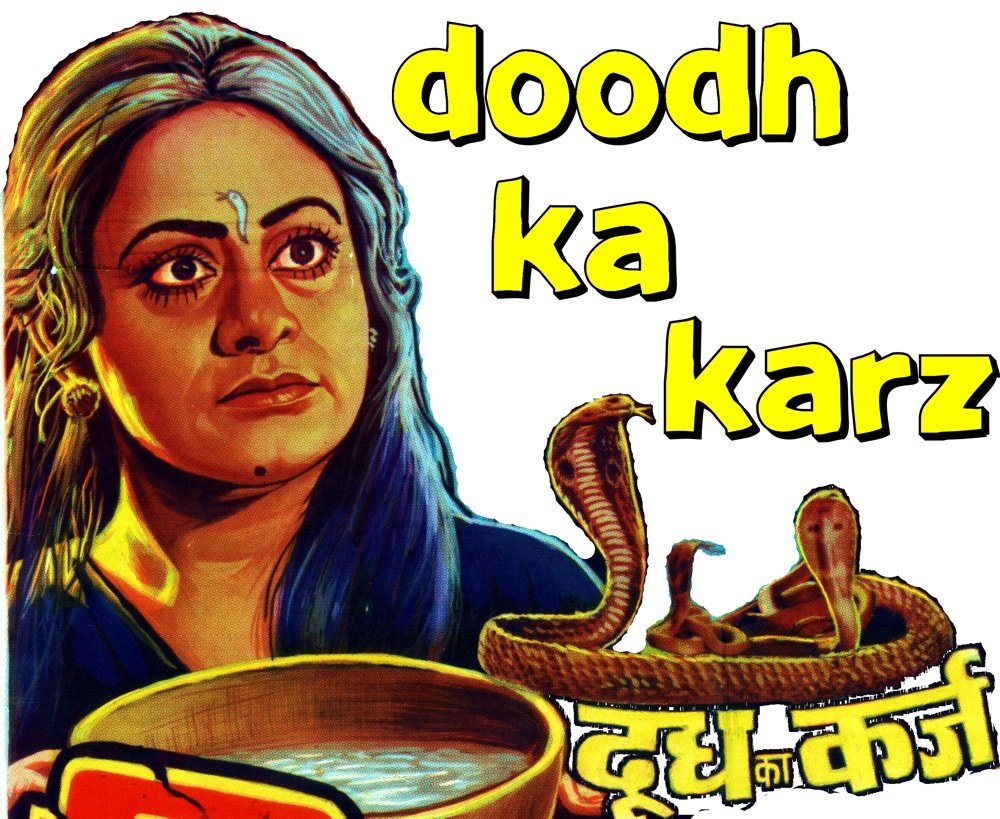
Desperate to support both her children—one human and one reptilian—Aruna struggles to make ends meet. Finally, in a scene of remarkable emotional conviction, she offers milk from her own breast to feed the hungry serpent who has refused food for days.
As the snake gratefully slurps away and the film’s mournful theme song wails in the background, one realises that Indian cinema has entered territory entirely its own.
After feeding him, Aruna sadly explains that although she loves him dearly, she can no longer support him and must send him away. Before departing, however, the foster son is reminded that he owes her a Doodh Ka Karz—a debt of milk—and that both he and his infant brother owe it to their murdered father to clear his name and avenge his death.
It is an absurd scene.
It is a touching scene.
It is a glorious scene.
The snake remains fiercely loyal to his cause and takes up residence at the Snake Temple, eventually becoming chief serpent of the entire establishment. The villagers soon recognise him as the one snake among hundreds who refuses to drink the milk offered to him. Clearly this noble creature is abstaining until justice has been served.
Years pass.
Aruna, who had been attacked and left for dead by the Thakur and his associates, has been rescued by the local blacksmith, who adopts her as a sister and her son as a nephew.
That son eventually grows into Jackie Shroff—a fine, strapping young fellow who has inherited his father’s mastery of the snake charmer’s been and is well on his way to becoming the most renowned snake charmer in the land.
His mother, however, remains permanently furious.
Eventually Jackie discovers why.
Aruna reveals that the beautiful young woman he has fallen in love with is the daughter of the very man responsible for his father’s murder. She also reminds him that he owes a duty to his father to restore the family honour and clear his tarnished reputation.
Matters build towards a spectacular climax when the stolen temple jewels are about to be sold to a foreign businessman. Unfortunately for the villains, the local reptile population has other ideas.
The chief snake of the temple realises that his enemies are finally within striking distance and proceeds to settle a few old scores of his own.
The finale is a soul-stirring extravaganza featuring flying snakes, leaping snakes, clusters of angry snakes and an electrifying been duel between an evil Tantrik and Jackie Shroff. By the time all the villainy has been exposed and every score settled, we are treated to a hugely emotional reunion between two long-lost brothers and their long-suffering mother.
Doodh Ka Karz is truly vintage stuff for those who like their snake movies packed with action, snake stunts, melodrama and industrial quantities of ham and cheese.
The climactic sequence in which hordes of snakes gatecrash the villain’s gathering and unleash slithery mayhem ranks among the great serpentine moments in Bollywood history.
Aruna Irani is completely in her element as the vengeful widow. She has always possessed the remarkable ability to deliver the cheesiest dialogue imaginable with absolute sincerity and conviction, and here she demonstrates that talent once again.
Jackie Shroff is perfectly adequate as the junior snake charmer, though he appears somewhat uncomfortable whenever the obligatory song-and-dance routines arrive. Neelam is attractive enough as the Thakur’s daughter but resembles a Barbie doll and acts rather like one too.
The villains are excellent, with Sadashiv Amrapurkar narrowly stealing acting honours from an equally effective Amrish Puri and a wonderfully slippery Prem Chopra.
The film is a rollickingly enjoyable snake yarn told in the most gloriously old-fashioned manner imaginable, emphasising all the Indianness that Bollywood once possessed before suffering its identity crisis and deciding it wanted to become Hollywood with song breaks.
It is nothing more than a desi fairy tale, but it is told with such warmth, sincerity, nostalgic charm and such a magnificent quantity of vintage cheese that it emerges a winner all the way.
Absolutely essential viewing for anyone with even the slightest weakness for snake-oriented cinema.