
The Hot Spot Rating
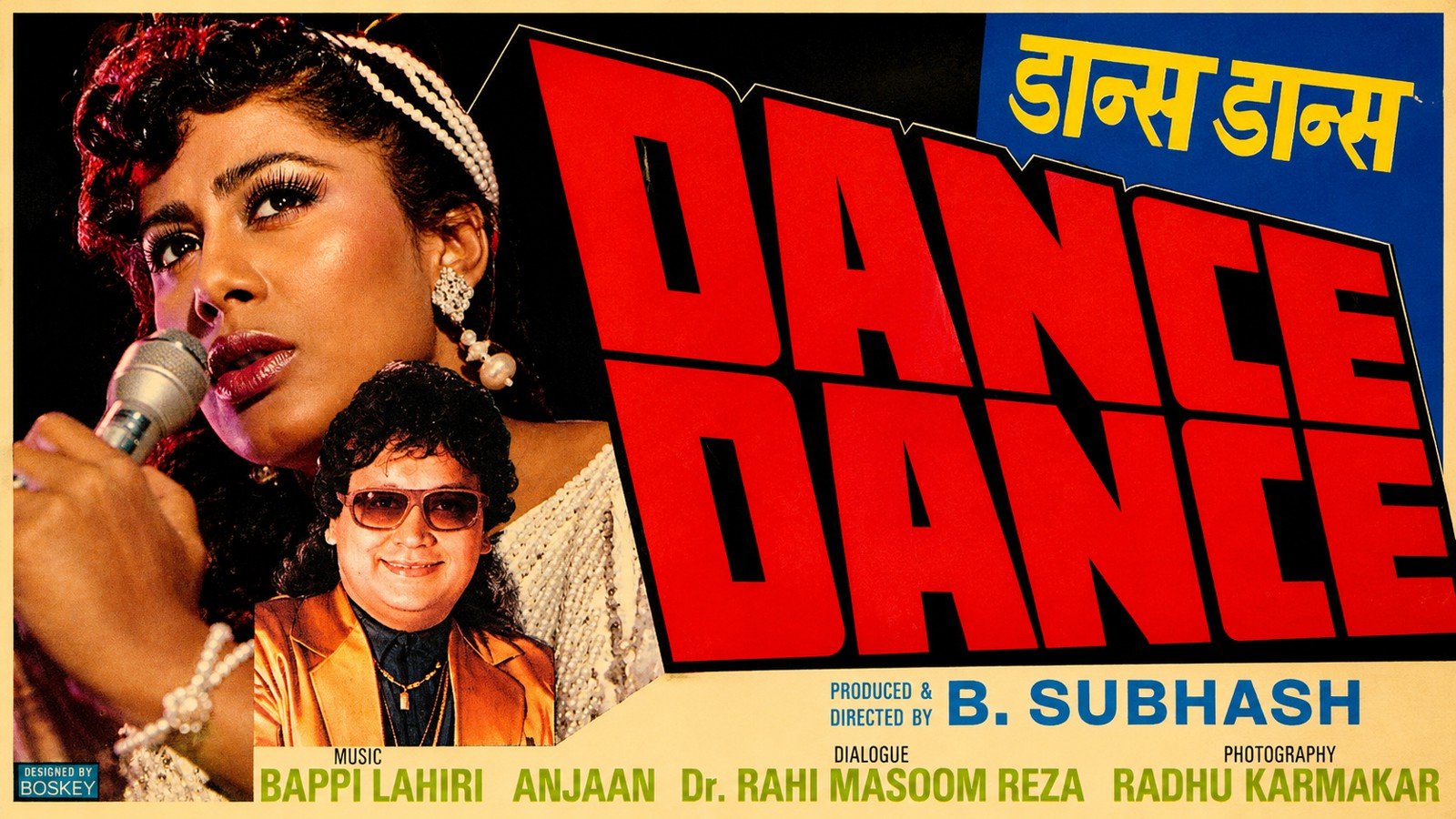
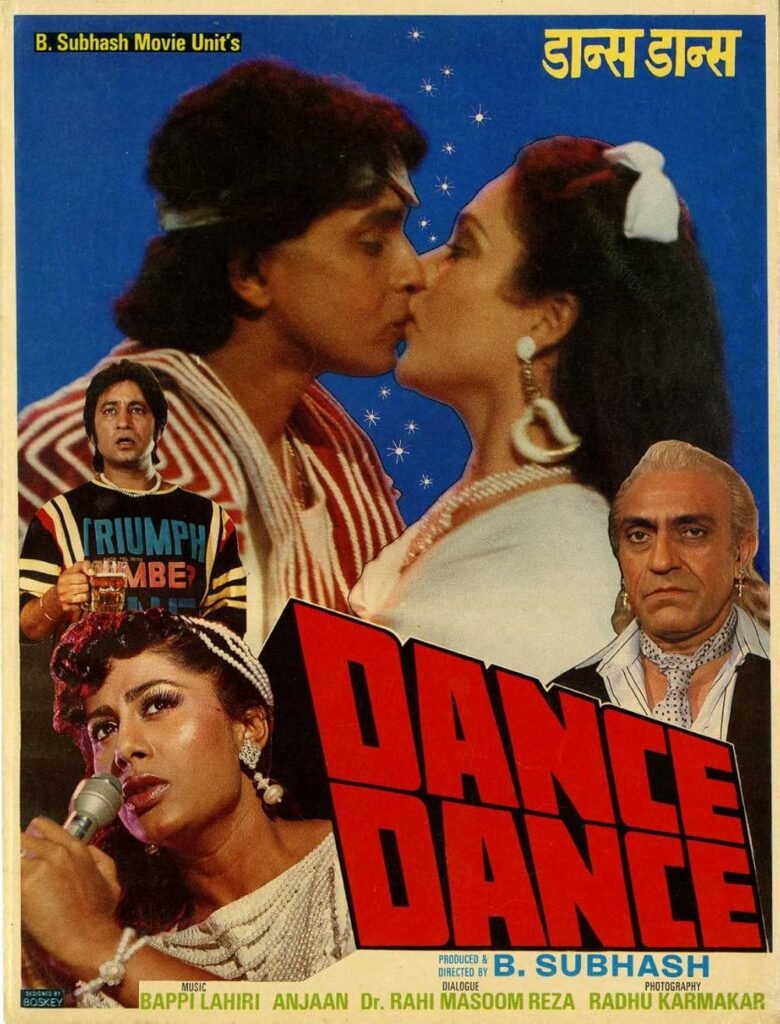
Dance Dance (1987)
Cast: Mithun Chakraborty, Smita Patil, Amrish Puri, Shakti Kapoor, Mandakini, Om Shivpuri,
Director: B. Subaash
Music Director: Bappi Lahiri
Synopsis: The Ultimate Disco Socio drama – the benchmark for all Dance Movies
“Oh my God, o-mi-God, o-mi-God, o-mi-God!”
My mind raced, pulse rate through the roof at the mere prospect, but then I was rudely yanked back to the reality of the distinctly charmless environment of Palika Bazaar where I had just scored the hit of a lifetime. For a paltry Rs. 45 (much more if you happen to earn in the increasingly worthless scraps that constitute the beleaguered Pakistani currency), I now had in my possession a shiny, spanking new, genuine DVD of arguably the greatest classic of its kind. Bless you Moser Baer and Indus Video. Better still, it came complete with never-before-experienced 5.1 Dolby Surround Sound.
I needed steadying at the mere thought of the giddy heights that I would soon be experiencing once again, reliving an event that comes once in a lifetime, if even that.
The experience in question would normally be referred to as just another motion picture or movie, but avoid being lulled into complacency. This motion picture is nothing short of one of those life-altering, epoch-marking moments in the existence of the common mortal. A film that captures the magic and wonder of cinema in totality. A motion picture that quite simply the camera was invented for and the human senses blessed to us by God so that we might indulge in an early slice of heaven in the form of B. Subaash Movie Unit’s unique cinematic and spiritual experience, Dance Dance.
Years ago, during the height of the great Mithun-Bappi-Subaash craze of the 1980s, Dance Dance arrived on the scene as nothing short of a revolution. Not only was the plot a genre-defining milestone in cinema history, but the sheer quality of Bappi Lahiri’s genius wove a web of disco vibrations unlike anything the world had previously experienced.
By the time Dance Dance arrived, Mithun Chakraborty was already a master craftsman of his trade, his pelvic movements chiselled and honed to frightening levels of precision. Juxtaposed against the sprightly, chubby, underwear-flashing innocence of Mandakini, the result was nothing less than cinematic wonderland.
The plot itself was spellbinding, involving music competitions, dance competitions, disco boogie wars, copyright abuse and, of course, love, honour and betrayal. This film had all the bases covered and then some.
Yet it is on the dance floor that Dance Dance truly explodes into scintillating action, proving itself to be the ultimate version of West Side Story, with shades of Roller Boogie, Purple Rain, Titanic and A Star Is Born thrown into the mix for good measure.
At first glance, Dance Dance may appear to be little more than another disposable 1980s disco movie featuring succulent slices of disco mujik courtesy of Bappi Lahiri, including such gems as the heart-stoppingly brilliant “Super Dancer”, the immortal “Everybody Dance With Pa Pa Pa” and, of course, the deeply poignant “Aa Gaya Aa Gaya Halwa Wala Aa Gaya”.
Yet perhaps the secret lies in the film’s simplicity and purity.
This is a film that lulls the viewer into its disco-laced sense of security before suddenly confronting them with such overwhelming pathos, drama and emotion that they begin questioning the very existence of God and the meaning of life itself. It challenges man’s most basic concepts of survival and demands soul-searching answers.
Indeed, Dance Dance offers nothing less than a blueprint for an entirely new way of life.
At the same time, it possesses the remarkable ability to appear no more than a light-hearted, frothy disco-revenge-romance-social-family drama that can be enjoyed by every member of the household, particularly the family hamster.
As a dance musical alone, the film established standards that remain unmatched despite being over twenty years old. Class, after all, is timeless and the benchmark set by Dance Dance remains forever beyond the reach of lesser filmmakers.
Dance Dance is the Citizen Kane of disco drama.
In fact, it is considerably more than that, because it contains everything Citizen Kane has to offer and then a great deal more besides.
Bappi Lahiri proved once and for all that he was, and remains, the undisputed God of Mujik. Even his lesser works are worthy of worship. Consider the immortal “Thoda Resham Lagta Hai, Thoda Sheesha Lagta Hai”, a song so influential that one suspects it may well have been responsible for making America what it is today.
Such was the power of the man.
Such was the power of Dance Dance.