
The Hot Spot Rating
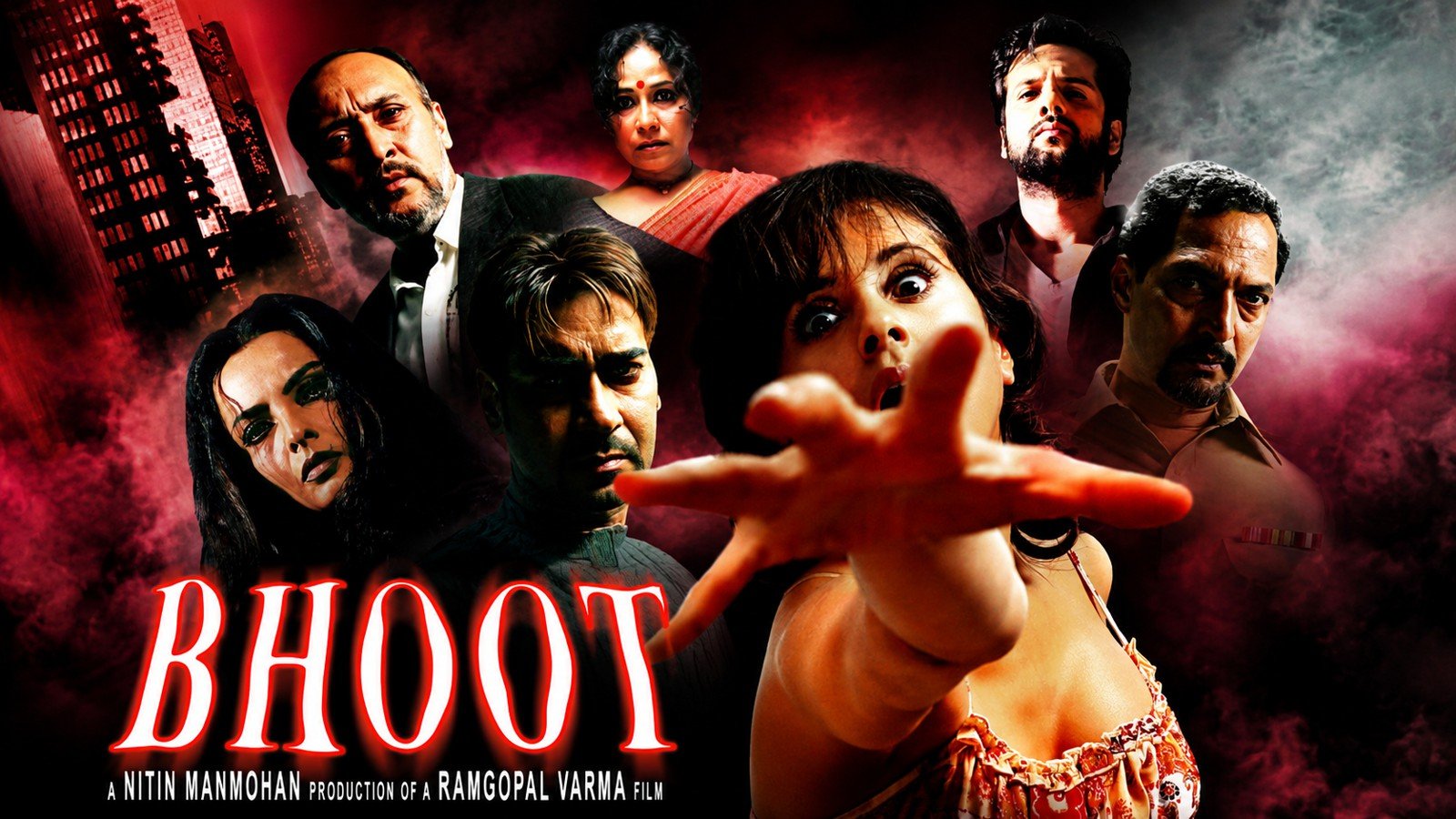
Bhoot (Ghost) (2003)
Cast: Urmila Matondkar, Ajay Devgan, Rekha, Nana Patekar, Tanuja, Fardeen Khan
Director: Ram Gopal Varma
Synopsis: Disgruntled spirit menaces young wife in high rise apartment block
First the good news; Ram Gopal Varma has yet again brought to the screen something that is hugely refreshing and a welcome change of direction from the usual inane song-and-dance routine that is such the bane of films from the subcontinent. Secondly, what the audience gets is a slickly made, beautifully shot and edited, competently acted film that entertains and holds viewer interest from the moment it begins until the very end.
The story might not be the most original ever conceived (some have suggested that RGV has simply re-done his earlier Raat), but at least he has made the effort—and a very successful one at that—of transferring the old ghostly horror story, forever trapped in the rotting Havelis of remote ancestral homes, into a chaotic urban setting. Here the haunted house is replaced by a typically monolithic eyesore of a high-rise apartment block bang in the centre of Bombay (we will NEVER refer to the city as Mumbai—sorry!). Let us also offer RGV hearty congratulations for not simply moulding his film from set-pieces thieved wholesale from Hollywood movies, something that 90% of Bollywood filmmakers can be accused of these days. Bravo therefore to Ram Gopal Varma for yet another attempt at injecting something fresh and challenging into an otherwise dull and plagiarism-oriented production line.
The film begins with Ajay Devgan hunting for a flat amidst the hustle and bustle of the city. The estate agent shows him an apartment that he finds immensely to his liking, though there is a minor hitch. A young woman, one of the previous occupants and apparently insane, had plunged to her death from the balcony of the twelfth-floor flat some time earlier. Ajay dismisses any superstitious concerns with the entirely reasonable observation that people die in all sorts of houses and that this does not automatically make the property cursed or evil.
The following day Ajay and his lovely wife Urmila move into the apartment. The only items left behind by the previous occupants are a pine-framed mirror and a stuffed clown toy complete with the sort of fixed idiotic grin that clowns always seem to possess.
When Urmila later discovers that a woman had jumped to her death from the very apartment she now inhabits, she is more than a little annoyed that her husband neglected to mention such a detail. Life continues normally for a while, however, until she gradually begins sensing the presence of Manjeet, the dead woman, and a young child lurking in the apartment, if not in body then certainly in spirit.
Slowly the restless and clearly disgruntled spirit of Manjeet begins to make her presence felt. Urmila sinks deeper and deeper into a depression that starts looking increasingly like possession rather than psychological distress. She takes to sleepwalking at all hours of the night and then the sleazy watchman is murdered in a particularly gruesome fashion.
The canny police inspector, played by Nana Patekar, begins to suspect that something decidedly fishy is taking place on the twelfth floor and launches an earnest investigation. His suspicions are heightened further when he notices one of the city’s leading psychiatrists making frequent visits to the apartment and discovers that Ajay Devgan’s wife is most certainly not feeling herself these days.
The plot thickens as Urmila’s condition deteriorates and the vengeance-filled spirit of Manjeet strengthens her vice-like grip upon the suffering woman.
Ultimately, in total desperation, Ajay follows the advice of the charwoman and summons Rekha, an extraordinarily glamorous spiritualist, to determine exactly what is wrong with his wife, who by this point is behaving alarmingly like Regan MacNeil from The Exorcist. Rekha immediately grasps the situation and realises that the wrongs perpetrated against the dead but disgruntled Manjeet must somehow be set right if Urmila is to be freed from her possession. Thus begins a race against time before Manjeet’s rage completely consumes her.
There is therefore nothing particularly novel about the plot itself, but the treatment is highly effective and supported by capable performances, excellent editing, and some crafty camerawork which demonstrates a genuine eye for striking compositions.
The performances are largely spot-on, with Ajay Devgan striving earnestly, perhaps a little too earnestly, in his role, while Urmila provides the theatrics. She had previously been nothing short of embarrassing in RGV’s last horror effort Kaun?, and this performance represents a vast improvement upon that unintentionally comic turn. Having said that, she remains rather unnatural and forced. Everything about her performance feels calculated and deliberate, and there is little spontaneity to her acting. She appears to have decided that because she is acting in a horror film she must behave exactly as she imagines people behave in horror films. The result is often artificial, and that slightly demented smile of hers tends to provoke giggles rather than fear. Nevertheless, compared to her work in Kaun?, this is practically a masterclass.
Nana Patekar hams it up wonderfully as the inspector while demonstrating that his English-speaking skills are second to none in Bollywood. Rekha arrives Merrin-like towards the fag end of the film and makes her presence felt in a brief but important role. Tanuja’s two-minute appearance provides the most natural acting in the entire picture, while Fardeen Khan has little to do except look terrified, which he accomplishes with varying degrees of success.
The most jarring aspect of the film is RGV’s apparent determination to frighten the audience every few minutes through carefully orchestrated shocks. Somebody really needs to explain to both RGV and his sound engineer that there is a considerable difference between being startled and being frightened.
Anyone suddenly blasted by an enormous noise is liable to jump out of their seat. One would react similarly whilst strolling peacefully down the street if a truck suddenly sounded its pressure horn directly behind them. Being startled is not the same thing as being scared, and it is here that the film comes somewhat undone, just as Kaun? did before it.
There are umpteen occasions during the course of the film where the audience is startled through nothing more than cheap tactics. Doorbells ring with enough force to induce mini heart attacks (today’s newspapers report that a sixty-year-old man apparently died of “fright” whilst watching the film in a Delhi cinema), and the film is littered with moments where sudden explosions of sound jolt the audience from their seats.
Yet being startled is a far cry from being genuinely unsettled.
This reviewer found himself increasingly irritated by the overuse of these sonic assaults. Admittedly there are a number of effective set-pieces, some genuinely creepy moments, and the shots of the apartment building itself are excellent. Yet much of the subtlety is sacrificed when the primary method of frightening the audience consists of repeatedly assaulting them with deafening noises.
Scaring and startling are two entirely different things, and this reviewer would plead with RGV to attempt to make his next horror film frightening without relying quite so heavily on his sound department to manufacture artificial scares. It simply doesn’t work that way.
Nonetheless, the film has gone on to take in some hefty box-office returns, which is encouraging not only because the industry was desperately in need of successful films, but because audiences have clearly demonstrated that they are eager to see material that deviates from the beaten-to-death formula of romance, comic frolics, and the usual vigilante nonsense.
Hats off to RGV for being a risk-taker and for possessing the courage and vision to do things differently, even when those experiments do not always come off.
One of these days Ram Gopal Varma is going to make a truly exceptional horror film.
Unfortunately, Bhoot, though highly enjoyable and consistently engrossing, is not quite that film.