
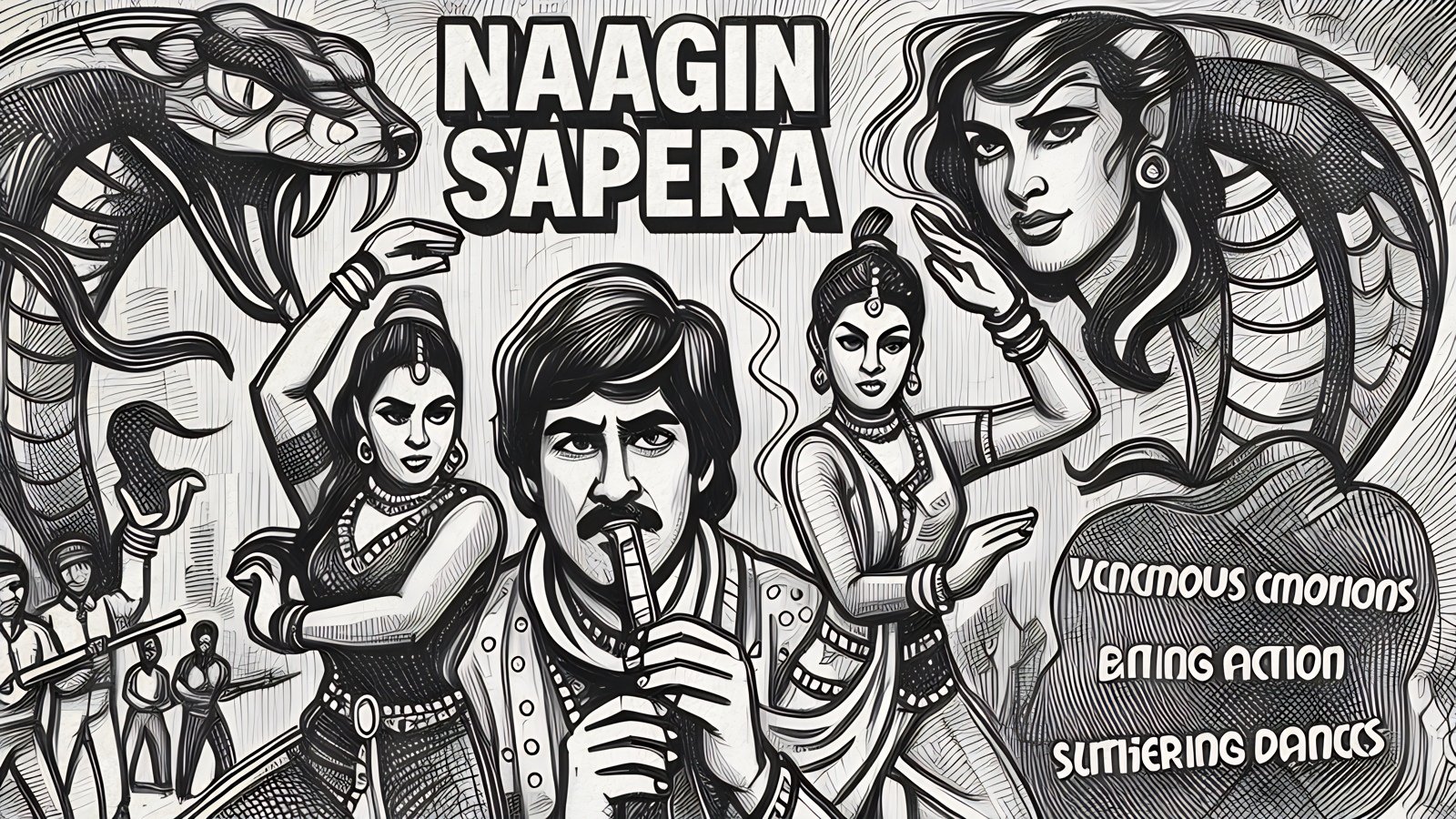
The Great Snake Movies of South Asian Cinema.
Over the years, one peculiarly desi genre has crept disturbingly close to the heart — probably far closer than any medically trained professional would consider remotely healthy.
It is difficult to pinpoint the exact moment this particular reptilian love affair truly began, though I strongly suspect early B-movie encounters with Sssssss and Rattlers may have been the first ominous warning signs.
The problem, however, was always supply and demand. The appetite for fresh reptilian fodder vastly exceeded the available stock, and waiting for the next slithery cinematic offering became an exercise in unbearable frustration. During the ’70s and ’80s, CGI remained a distant fantasy while the glorious stop-motion wizardry of Ray Harryhausen had largely faded into extinction.
Desperate snake maniacs therefore had to survive on fleeting cameos in films such as the The Abominable Dr. Phibes series or the occasional Bond or Tarzan movie merely to get a desperately needed reptilian fix.
Snake movies, of course, had existed in South Asia ever since cinema itself first slithered into existence, though precisely which film qualifies as the very first desi snake movie remains a mystery beyond my current powers of investigation.
Life itself changed forever, however, once the glorious crossover occurred from Hollywood snake movies into the phenomenal reptilian cinema emerging from our own part of the world.
Because desi snake films are not merely monster movies.
They are deeply intertwined with romance, mythology, folklore, reincarnation, revenge, shape-shifting, ancient curses, erotic obsession, and all manner of deliciously exotic legends from bygone eras.
Most importantly, unlike in Western cinema where snakes are generally portrayed as villains, South Asian snake films frequently position the serpent as protector, avenger, or tragic saviour — much in the same way Godzilla eventually became a heroic protector to his Japanese admirers.
Over the years, the snake movie evolved so successfully in South Asia that it effectively became an entirely separate cinematic genre unto itself. It would hardly be outrageous to suggest that snake movies may actually outnumber courtroom dramas or heist thrillers across the subcontinent.
There have been countless reptilian epics over the decades.
Even Pakistani cinema gave it a determined go with titles such as Saperan, Naag Nagin, Naag Muni, and the utterly incredible Sheeshnaagin starring Shabnam and Javed Sheikh, featuring what may well be cinema’s first rock band composed entirely of highly musically gifted snakes.
And what tunes they occasionally unleashed.
Still, Pakistani snake cinema remains little more than a ripple compared to the colossal reptilian tidal wave unleashed by India.
Snake movies were always avidly devoured within our household, and I still vividly remember the drooling excitement surrounding our expedition to the desi cinemas of London to watch Nagin upon its original release during the mid-’70s.
Reena Roy absolutely turned it on, and the film’s enormous success inspired a glorious avalanche of copycats.
Then came the late ’80s when Sridevi and Amrish Puri propelled Nagina to unimaginable box-office heights.
I distinctly remember a cousin’s cook in Bombay endlessly preparing magnificently spicy dishes while listening obsessively to an audio cassette of Nagina’s dialogues, which he had memorised right down to the final hiss.
Nagina even spawned a sequel — something practically unheard of in Bollywood during the 1980s — and by the time Nigahen: Nagina Part II arrived, audiences had become astonishingly well-versed in the mystical lore of the Ichchadhari and Manidhari Naags and Nagins.
Another towering reptilian epic of the era was Sheshnaag, featuring Jeetendra and Madhavi performing one of the most exhilarating snake dances in cinematic history while Danny Denzongpa cut an imposing figure as the evil Tantrik.
During a more recent expedition through the glorious yet sadly decaying environs of Bombay’s legendary Naaz Compound, I stumbled upon several magnificent DVD and VCD shops.
Some, admittedly, were somewhat less than hospitable.
One or two particularly suspicious establishments refused to allow any browsing whatsoever. Customers were expected to know precisely what they wanted beforehand or risk having the door firmly and rather rudely shut in their faces.
After surviving several such humiliating encounters, I finally discovered one glorious little shop that actually welcomed customers inside.
There I uncovered an absolute treasure chest of horror films and — far more importantly — an astonishing collection of snake movies.
Among the reptilian bounty acquired were:
- Naag Shakti
- Naag Pratishodh
- Naageshwar
- Shiva Ka Insaaf
- Naag Nagin
- Naach Nachaye Nagin
- Naag Yoni
…and one particularly spectacular-looking title whose name remains impossible to decipher but whose DVD cover featured an entire posse of highly enthusiastic cobras.
And then, naturally, we arrive at the undisputed crown jewel of reptilian cinema:
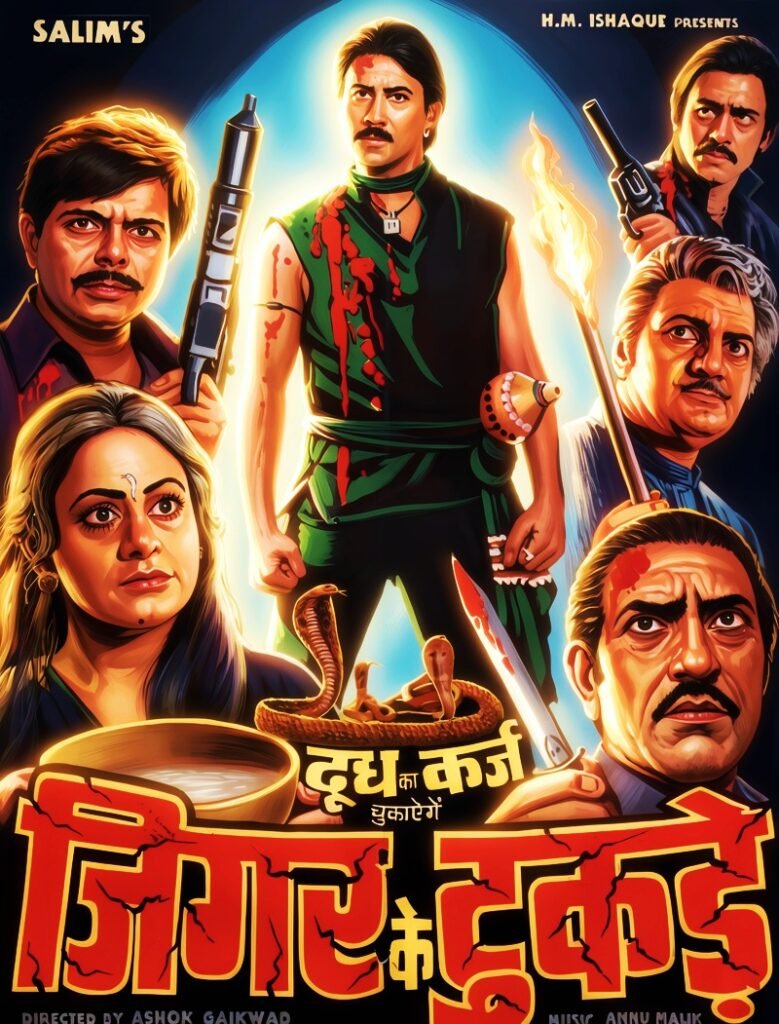
Doodh Ka Karz.
The stupendous Aruna Irani / Jackie Shroff snake epic remains, quite simply, the greatest snake movie ever committed to celluloid.
Never has there been such gut-wrenching pathos, volcanic melodrama, and emotional devastation within a reptilian motion picture.
The director introduces the groundbreaking innovation known as Snake-Cam, whereby the camera adopts the point-of-view of the cobra itself, helplessly witnessing its beloved master being murdered from inside a wicker basket.
Pure genius.
There are moments of astonishing emotional intensity — remember those old trailers promising “heartfelt emotions”? — including scenes where Aruna Irani practically breastfeeds a cobra, alongside a truly hair-raising climax involving:
- dozens of leaping cobras,
- live mongooses,
- and Bob Christo meeting a magnificently slithery demise.
Since then, I have also experienced the rather splendid Shiva Naaga, featuring among other wonders:
- people vomiting live chickens,
- and an extraordinary James Bond-style chase sequence involving a villain pursued downstream by a cobra travelling in a boat.
One simply cannot invent genius of this calibre.