The Hot Spot Rating
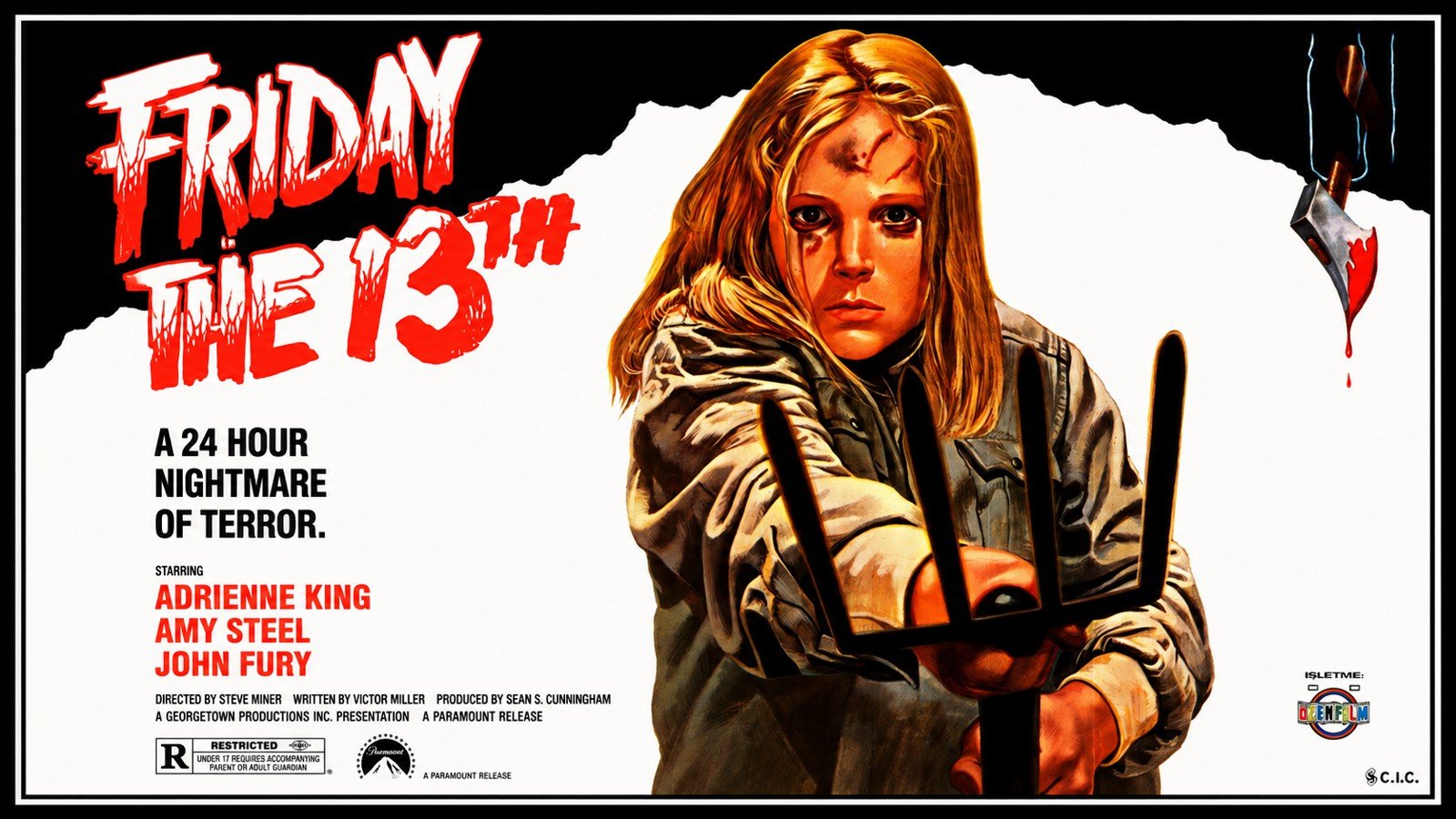
Friday the 13th: Part 2 (1981)
Cast: Besty Palmer, Amy Steel, Adrienne King, John Furey, Warrington Gillette
Director: Stever Miner
Synopsis: More than enough of the same formula from the original smash hit with copious amounts of gore and creative death scenes to the delight of fans. Lurid, Nasty shocker – most enjoyable!
“An above-average sequel.”
— Variety
“The suspense sequences are handled with considerable skill.”— Variety
“One of the better entries in the series.”— Kim Newman, Nightmare Movies
“Arguably the scariest Friday the 13th film.”— John Kenneth Muir, Horror Films of the 1980s
“A surprisingly effective stalk-and-slash thriller.”— Time Out Film Guide
“The sack-headed Jason is far creepier than the hockey-mask version.”— DVD Savant
“One of the most atmospheric films in the franchise.”— Arrow in the Head
“The best Friday sequel.”— Fangoria retrospective
“A superior sequel in almost every respect.”— Hysteria Lives!
“Jason is genuinely frightening here.”— Hysteria Lives!
“The film still delivers some genuinely tense moments.”— Slant Magazine
“A mechanical reworking of the original.”— The New York Times
“The same old stalk-and-slash formula.”— The Washington Post
“Predictable but efficient.”— The Monthly Film Bulletin
I have to admit to being a huge fan of Friday the 13th when it first hit cinemas in the summer of 1980. I caught it on opening night on an actual Friday the 13th in London, a few weeks after its American release, and thoroughly enjoyed its shameless jack-in-the-box shock tactics, gruesome violence and crowd-pleasing scares.
One memory from that evening remains particularly vivid.
As the film reached its conclusion, a sizeable portion of the audience had already begun leaving the cinema, assuming the story was over. Moments later there were shrieks, gasps and then laughter erupting from those still seated inside. Confused patrons attempted to rush back into the auditorium to discover what they had missed, but by then it was too late.
Jason had arrived.
That final shock worked brilliantly and instantly transformed what had been a fairly ordinary slasher into something memorable. Paramount suddenly found itself sitting on a goldmine, having acquired what was originally little more than a low-budget Halloween imitation.
With millions rolling into the studio coffers, a sequel was inevitable.
Production on Friday the 13th Part 2 began in October 1980 and the film was conceived as a direct continuation of the original story. Five years have passed since the Camp Blood massacre and a fresh batch of hopelessly idiotic teenagers are preparing to wander into danger.
The opening twelve minutes focus on Alice, the sole survivor from the first film, who is attempting to rebuild her life after her traumatic experiences at Crystal Lake.
Unfortunately, things do not go well.
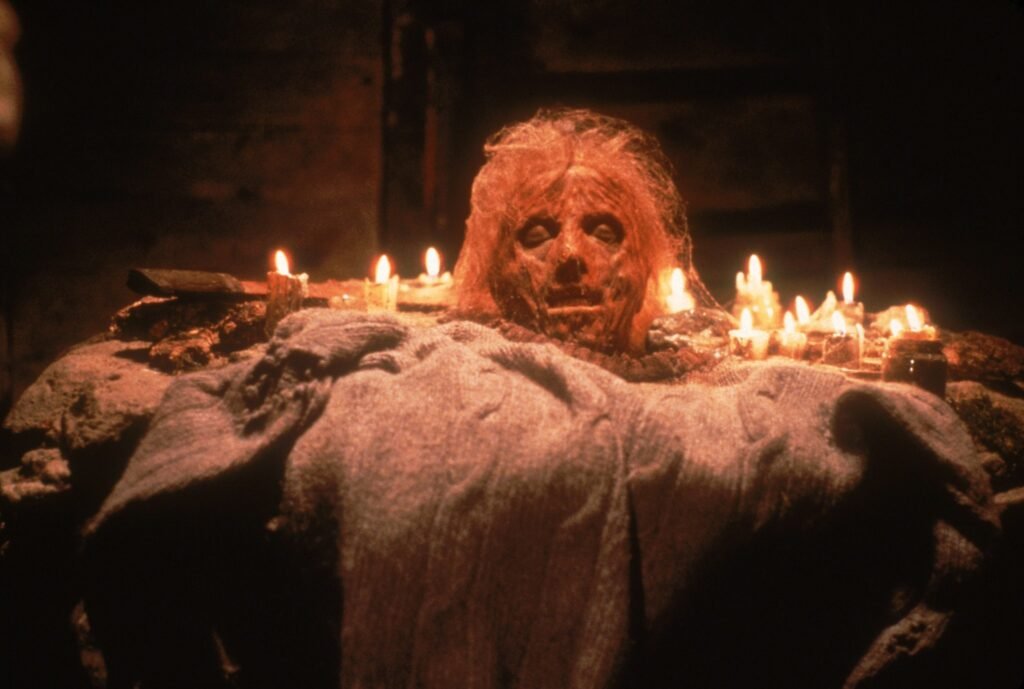
A mysterious stalker enters her apartment, places Mrs Voorhees’ severed head in her kitchen and then introduces a screwdriver to Alice’s temple in one of the sequel’s most memorable moments.
The audience is led to believe that Jason, despite supposedly drowning years earlier, somehow survived in the wilderness surrounding Crystal Lake and has now returned to avenge his mother’s death.
Crazy Ralph also returns for one final appearance, continuing his role as the resident prophet of doom.
After Alice’s demise, the film settles into familiar territory as a fresh group of counsellors arrive at a nearby training camp. Following the obligatory half-hour of flirting, practical jokes, skinny-dipping and assorted youthful nonsense, Jason finally gets down to business.
At this stage he has yet to acquire his iconic hockey mask and instead prowls around wearing the now-famous burlap sack over his head.
The body count begins mounting rapidly during the second half and eventually we arrive at the traditional slasher climax involving stalking, chasing, screaming, hiding, slashing, running and repeatedly attempting to start vehicles that stubbornly refuse to cooperate.
One of the more amusing aspects of revisiting the film today is seeing just how vulnerable Jason still is.
He gets kicked in the groin.
He struggles to break through doors.
He gets knocked around by ordinary people.
In later instalments Jason would casually hurl grown men across rooms and smash through walls as though they were made of cardboard. Here he still appears to be operating under normal human limitations.
Clearly the superhuman abilities arrived later.
I have often suspected that Jason’s powers are somehow linked to the hockey mask itself. Much like Samson drawing strength from his hair, Jason appears to derive supernatural abilities from sporting the correct headgear. A burlap sack simply will not do.
The film itself is largely an uninspired retread of the original, but it establishes the formula that would define the remainder of the series.
Characterisation is minimal, acting is functional at best, and the primary focus falls upon the shock scenes and inventive murders.
Unfortunately, many of those murders were severely compromised by the MPAA. The censors demanded extensive cuts before granting the film an R rating, reducing several of the most elaborate death scenes to mere fragments of their original form.
The famous impaled lovers sequence suffered particularly badly.
Despite numerous DVD and Blu-ray releases over the years, most of this missing footage has never been recovered and may well be lost forever.
At the time, the MPAA was increasingly alarmed by the horror boom. As filmmakers competed to create ever more outrageous and graphic murder scenes, the censors responded by becoming progressively more aggressive in their demands for cuts.
The early 1980s saw growing concern from moral campaigners, religious groups and self-appointed guardians of public decency who regarded many of these films as little more than degenerative bloodbaths. Friday the 13th Part 2, My Bloody Valentine and numerous others found themselves caught directly in the crossfire.
Critics hated the film.
Audiences, however, loved it.
Produced for approximately $1.5 million, it went on to earn more than $21 million and firmly established Friday the 13th as a franchise Paramount could continue milking for years to come.
The film’s strongest moments remain those involving Betsy Palmer, whether appearing in flashback form or through the recurring appearances of Mrs Voorhees’ severed head. Harry Manfredini’s score also works overtime attempting to inject genuine atmosphere and menace into proceedings.
The problem is that the slasher genre was already beginning to drift in the wrong direction.
Where Halloween emphasised suspense, atmosphere and tension, many of the imitators became obsessed with the mechanics of the kill itself. The focus shifted away from storytelling and toward showcasing increasingly elaborate special-effects sequences.
Characters became disposable.
Plots became irrelevant.
Suspense became optional.
The “creative death” gradually became the sole attraction.
In the process, many slasher films quite literally lost the plot.
The genre’s rapid decline was largely self-inflicted, as filmmakers became convinced that gore alone could sustain audience interest. They were spectacularly mistaken.
One final point deserves mention.
Friday the 13th Part 2 boasts one of the greatest horror trailers ever produced. Even the legendary voice-over artist responsible for countless trailers during the era later cited it as his personal favourite.
Having watched it again recently, it is difficult to argue with him.
The trailer remains more effective than many entire horror films.