
The Hot Spot Rating
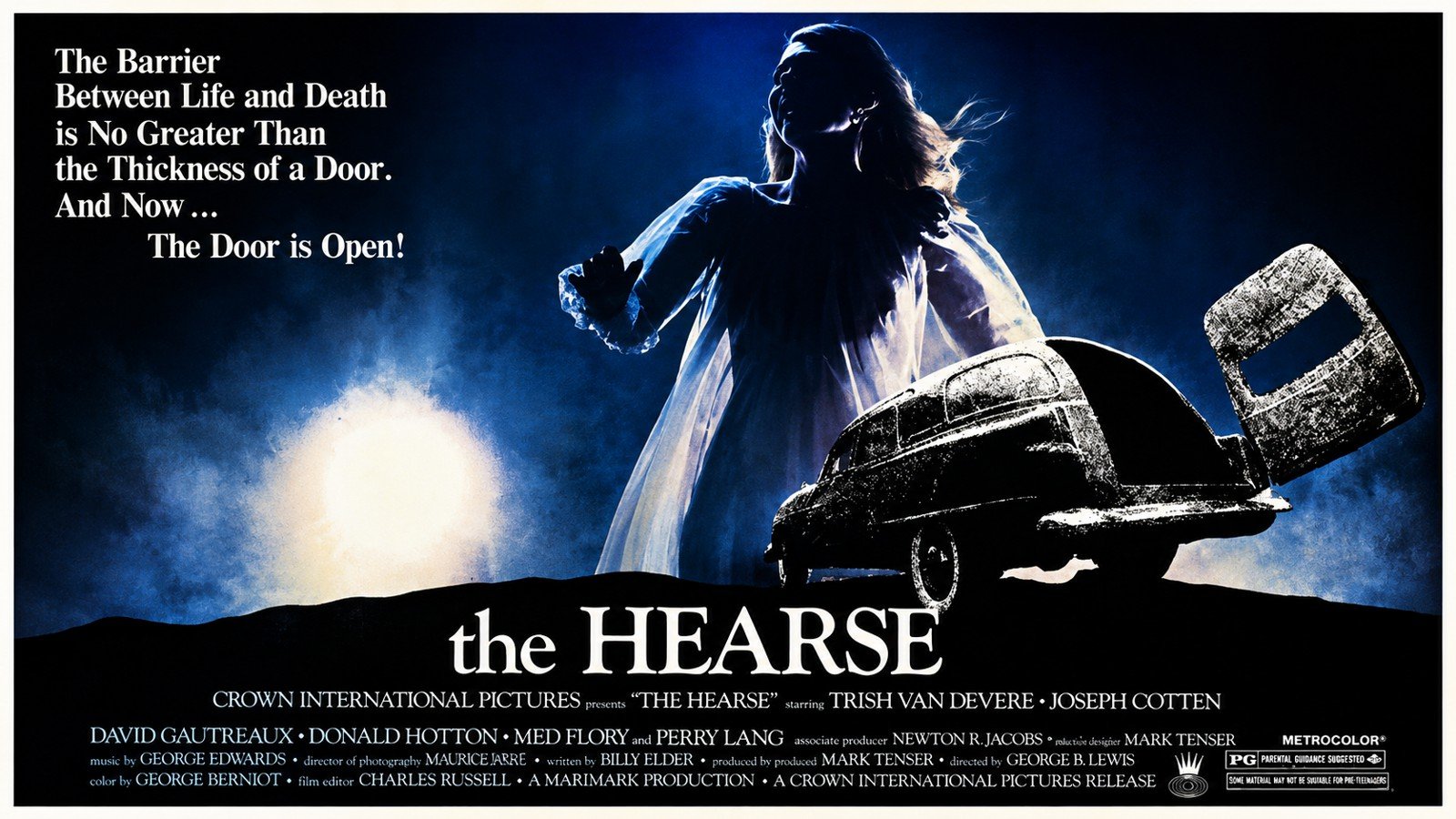
The Hearse (1980)
Cast: Trish Van Devere, Joseph Cotten, David Gautreaux, Donald Hotton
Director: George Bowers
Nutshell: Billowing clouds of fog, a mysterious Hearse, a damsel in distress, mysterious village inhabitants……..a crashing bore!
“This summer’s best example of an Idiot Plot.”— Roger Ebert“The Hearse qualifies as this summer’s garage sale of horror movies.”— Roger Ebert“It contains all the best clichés from recent, more successful horror movies.”— Roger Ebert
“Moderately scary and pretty unpleasant, too.”— Janet Maslin, The New York Times“
A little bit of a witch movie and a little bit of a haunted house movie.”— Talk Film Society
“Not particularly [scary].”— Talk Film Society
“Clouds of fog do not a scary movie make.”— HorrorNews.net
“The Hearse really felt like a made-for-television movie.”— HorrorNews.net
“One scary scene in it, 3 minutes of scary and 85 minutes of nary a reason to stay awake.”— HorrorNews.net
“If you’re suffering from insomnia and all out of Ambien…”— HorrorNews.net
“This movie is a mess.”— Crappy Movie Reviews
“There is a kernel of an interesting story here.”— Crappy Movie Reviews
“It tries to create some atmosphere and scares like the much better entries in the genre… but it doesn’t work.”— Crappy Movie Reviews
“It’s just really painfully boring.”— Crappy Movie Reviews
“What was meant to be a relaxing getaway turns into a nightmare.”— Talk Film Society
“This summer’s best example of an Idiot Plot.” — Roger Ebert
“The Hearse qualifies as this summer’s garage sale of horror movies.” — Roger Ebert
“Clouds of fog do not a scary movie make.” — HorrorNews.net
“There is a kernel of an interesting story here.” — Crappy Movie Reviews
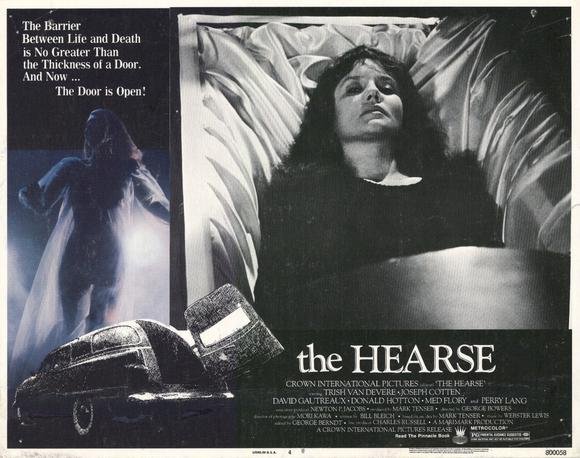
Poor Jane Hardy has had a rough time of it lately. Her mother has died, her marriage has collapsed, and in an effort to rebuild her shattered nerves she decides the best possible course of action is to move to the middle of nowhere and live alone in her long-deceased aunt’s house in a town where she knows absolutely nobody.
Both her psychiatrist and her best friend strongly advise against such a spectacularly bad idea, but Jane is convinced that abandoning familiarity and isolating herself completely is precisely what she needs to begin healing.
Off she sets, driving along the coast on a lengthy journey before eventually arriving in the small town of Blackford.
Unfortunately, Blackford immediately proves to be one of those communities where everybody appears to have attended the same School of Hostility.
Wherever Jane goes she is greeted with suspicion, cold stares and barely concealed contempt. One little girl even informs her that her mother has forbidden her from speaking to Jane. The townsfolk want nothing whatsoever to do with her, especially after discovering she is living in that house.
Even a horse at farmhand Renqvist’s place appears offended by the mere mention of the property.
The local store refuses deliveries to the address, and it soon becomes clear that both the house and anyone foolish enough to occupy it have become social outcasts.
It does not help matters that Jane herself is rather difficult to warm to. She possesses the unfortunate habit of mocking people, carries herself with a distinctly haughty air, and displays all the natural charm of a tax audit.
The only locals who seem remotely interested in her are three permanently hormonal teenagers incapable of coherent thought, a sleazy sheriff who wastes no time making unwanted advances, and old man Pratchett, who has looked after the property for years and feels it ought to belong to him by divine right.
Then there is the matter of the hearse.
A mysterious black hearse repeatedly attempts to run Jane off the road, while strange things begin happening inside the house itself. Reflections of her deceased aunt seem to lurk in mirrors, mysterious noises echo through empty rooms, and an old music box starts playing by itself.
None of these developments would generally be considered encouraging.
Yet Jane stubbornly digs her heels in and refuses to leave despite receiving what may well be the least welcoming reception in cinematic history.
Thankfully, she soon discovers one sympathetic face in town. A handsome and charming young man who has a curious habit of appearing at exactly the right moment whenever she finds herself in difficulty.
Jane falls for him almost immediately.
Indeed, she seems positively delighted that somebody in Blackford does not actively despise her.
Romance blossoms between the pair, but the hearse continues its relentless campaign of intimidation while the increasingly hostile townsfolk make life ever more uncomfortable.
Gradually, the truth surrounding Jane’s aunt begins to emerge.
Years earlier she had fallen hopelessly in love with a mysterious stranger. That romance soon developed into an obsession and ultimately led her into the worlds of black magic, Satanism and assorted ungodly pursuits, causing the entire community to turn against her.
The question now becomes whether Jane is destined to follow exactly the same path.
Is her charming new suitor really the Prince Charming he appears to be, or is there something far darker behind his remarkably convenient appearances?
Who is driving the sinister hearse?
And perhaps most importantly, is the house itself slowly drawing Jane into the same occult nightmare that consumed her aunt?
Will she ever escape Blackford, or is she destined to remain trapped in a witch’s house forever?
The film inevitably invites comparison with The Changeling, released only a few months earlier and also starring Trish Van Devere. Unfortunately for The Hearse, such comparisons do it no favours whatsoever.
The Changeling contained several genuinely memorable sequences that remain vivid decades later. The bouncing tennis ball. The possessed wheelchair. George C. Scott’s commanding performance. A genuinely effective mystery and a satisfying twist.
The Hearse possesses none of these qualities.
Instead, it plays like an overlong and painfully predictable television movie. It lumbers from one scene to the next attempting to generate suspense and dread but rarely manages anything beyond mild boredom. The mystery is transparent, the pacing sluggish, and the scares almost entirely absent.
Matters are not helped by the fact that Jane Hardy is such an unsympathetic protagonist. Spending ninety minutes in her company often feels less like a horror film and more like a test of endurance.
The one genuinely amusing moment arrives when Jane returns home and is startled by the sudden appearance of the local priest.
“Father, you shocked the hell out of me!” she exclaims.
To which he calmly replies:
“I should take that as a compliment.”
It is a delightful exchange and one of the few moments of wit in an otherwise dreary and uninspired affair.
Ultimately, The Hearse is a film that constantly threatens to become interesting but never quite manages it. Despite an attractive premise involving Satanism, haunted houses, mysterious hearses and hostile small-town secrets, the film somehow drains all excitement from its ingredients and serves them up in the blandest manner imaginable.
A hearse may be designed to carry the dead, but in this case it also seems to be carrying the film’s suspense along with it.