
The Hot Spot Rating
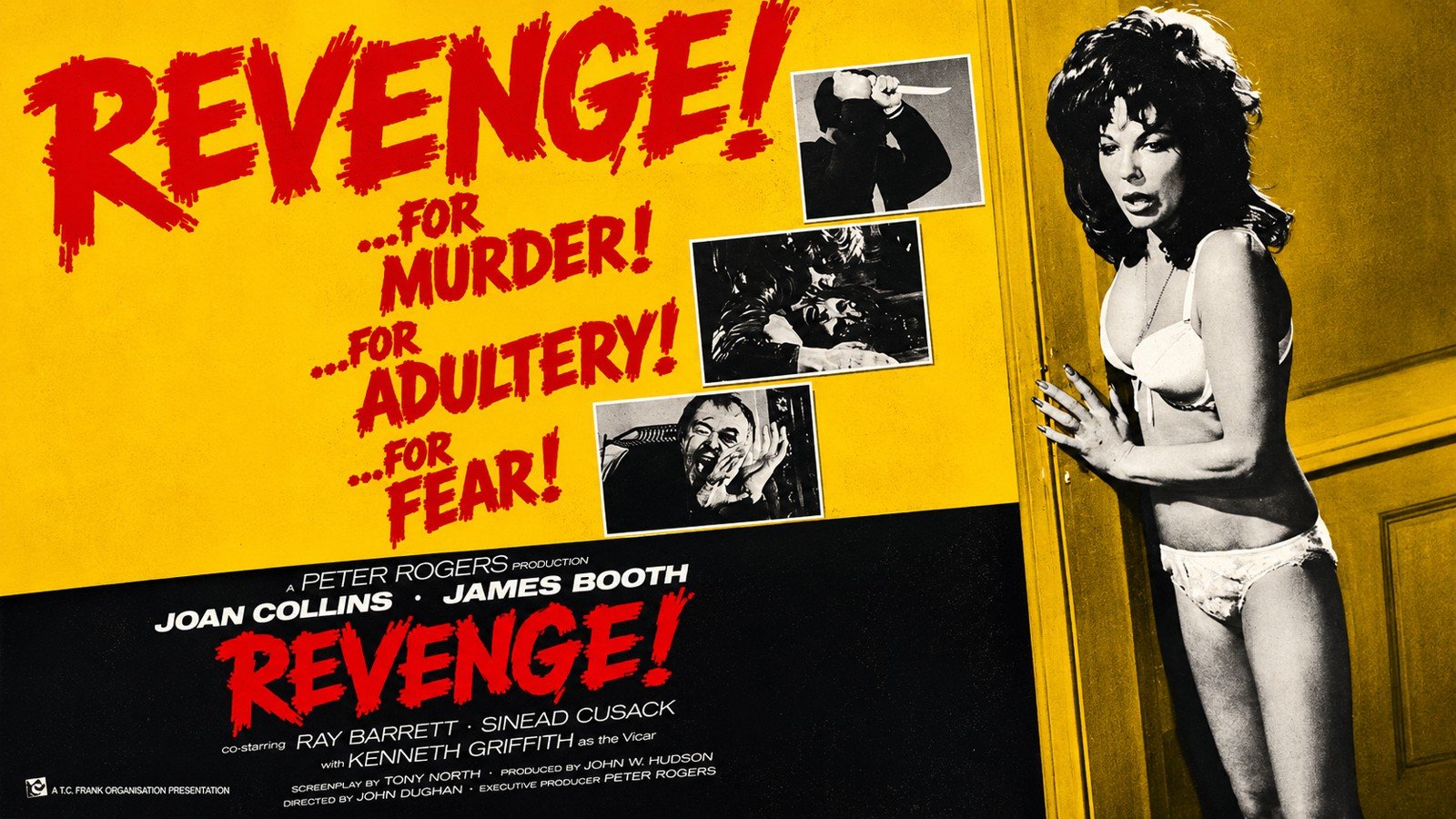
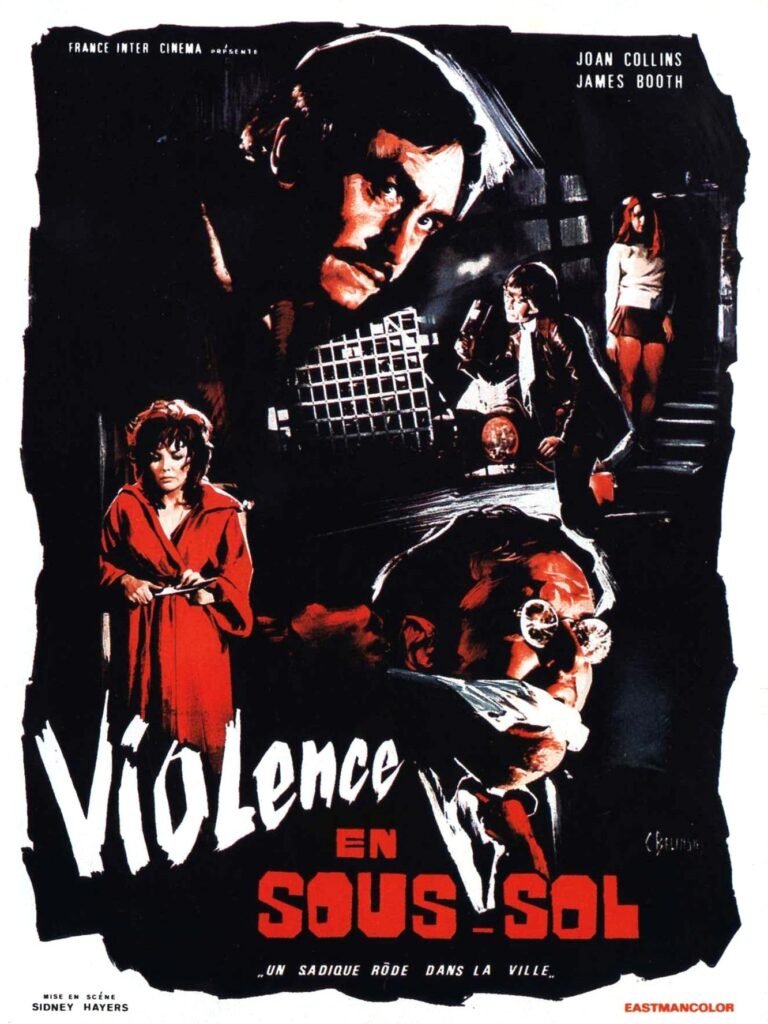
Revenge! (1971)
Cast: Joan Collins, James Booth, Ray Barrett, Sinead Cusak, Kenneth Griffith
Director: Sidney Hayers
Nutshell: In the year of Straw Dogs, this well-acted little thriller is a tale of regular folk revealing their dark sides and being unable to control events once they begin to spin out of control.
“A well-made, authentic-looking British thriller.” — Kine Weekly
“Meaty adult entertainment.” — Kine Weekly
“Full of ingenious twists and turns.” — Kine Weekly
“The performances are all excellent.” — Kine Weekly
“An entertaining slice of 70s sensationalism.” — The Joan Collins Archive
“Emotionally devastating.” — Letterboxd user review by loureviews
“A very well-written and acted piece.” — Letterboxd user review by loureviews
“Excellent little British gem.” — Letterboxd user review by Kevin Royal Johnson
“The tension builds [and] the whole thing starts to come apart.” — Letterboxd user review by Kevin Royal Johnson
“A surprisingly obscure 70s thriller.” — On Magazine
“Superb screenplay keeps this somewhat obscure 70s thriller ticking over beautifully.” — On Magazine
A family consisting of a father, stepmother and three adolescents leave the courtroom in a highly agitated state after the case involving the murder of their daughter appears to be collapsing disastrously. Shortly afterwards, a close family friend who also lost his own daughter to the same predator arrives with even worse news: the case is likely to be dismissed altogether due to insufficient evidence.
The revelation enrages everyone present. Soon afterwards, the friend takes the family on a grim little expedition where they secretly observe the accused man during his daily routine. The sequence is particularly unsettling because the old fellow deliberately wanders past a children’s playground, lingering there in a manner that instantly fuels everyone’s suspicions and disgust.
In a fit of rage and desperation, a reckless plan is hastily conceived. That very evening, a botched vigilante operation takes place, full of panic and confusion. The supposed paedophile murderer is abducted and dragged into the basement storage room of the family pub, which also serves as their home.
Carol, played by Joan Collins, initially remains upstairs but soon discovers what is happening and wastes little time unleashing her fury upon the terrified captive. Cornered like an animal and surrounded by enraged family members, the old man is beaten mercilessly until, to everyone’s horror, he appears to have been strangled to death.
Now comes the truly uncomfortable part. The family must somehow continue functioning as normal while believing they have committed murder. The pub opens for business as usual, pints are poured, customers chatter away happily upstairs, but beneath the surface nerves begin to fray catastrophically as the burden of the secret eats away at them.
Relief briefly replaces panic when they discover the decrepit old pervert is not actually dead after all. The problem now becomes figuring out what to do with him before he informs the police. Their solution is horrifyingly simple: leave him locked away in the cellar without food or drink and allow nature to take its course.
However, events suddenly take a disastrous turn when news arrives from the police station that an entirely new suspect is now being questioned for the same crimes.
The expected twist, therefore, is that the old man may not have been the predator they believed him to be after all. Realising the horrifying mistake they may have made, James Booth’s character desperately attempts to make amends, suddenly becoming remarkably kind and considerate toward the very man he nearly murdered only hours earlier.
Meanwhile, the psychological strain destroys the family from within. Booth begins drinking heavily, Joan Collins becomes consumed by guilt and panic, while their accomplice flees the city entirely. Tensions within the household spiral increasingly out of control, especially between the children and their stepmother.
One especially ugly sequence sees the older son Lee reacting violently to feelings of emasculation and frustration by attacking his stepmother in the cellar in full view of the horrified captive. The atmosphere within the family becomes utterly poisonous as accusations, fear and guilt begin tearing everyone apart.
Eventually, Collins and Lee abandon the scene altogether, leaving James Booth alone to somehow compensate the abducted man and persuade him not to involve the police. A dreadful mistake has clearly been made, but at least nobody appears permanently harmed beyond a few bruises and scratches.
Or so they think.
Naturally, another unpleasant twist remains waiting before the film reaches its conclusion.
Released in 1971, Revenge arrived the same year as another controversial thriller exploring violence and humiliation: Straw Dogs. While Sam Peckinpah’s film exploded into notoriety and critical acclaim, Revenge slipped quietly into obscurity despite being a respectable and often thought-provoking thriller in its own right.
Looking back, one suspects Straw Dogs benefited enormously from the outrage surrounding its infamous rape sequence, but more importantly, Peckinpah simply possessed a much stronger instinct for generating unbearable tension and psychological terror. That is ultimately where Revenge falls short.
The material here should have produced almost unbearable suspense. There are certainly moments of genuine discomfort and some reasonably effective tension, but director Sidney Hayers never quite manages to sustain the suffocating atmosphere the story requires. In the hands of a director more attuned to suspense and psychological horror, this could potentially have become something truly harrowing.
Nevertheless, the film remains highly interesting for several reasons. Firstly, the subject matter itself was daring for mainstream British cinema of the early 1970s. Paedophilia was hardly a commercially attractive topic, yet this was an era when filmmakers seemed far more willing to explore deeply uncomfortable material. Hammer had tackled similar territory earlier with the excellent Never Take Candy From a Stranger, but such films remained relatively rare.
Secondly, the performances are consistently strong throughout. Joan Collins in particular delivers a surprisingly powerful performance, full of raw nerves and mounting hysteria, while James Booth provides equally solid support.
The pub setting also adds a certain distinctly British flavour to proceedings. Quite apart from the sociological fascination of seeing early 70s pub culture recreated so naturally, it simply feels appropriate for a film of this era to unfold against such a backdrop. One also notices how completely different London appears compared to today. There is scarcely a hint of multiculturalism or non-English voices anywhere in sight — a reminder of just how dramatically the city has transformed over the decades.
Revenge ultimately remains an engaging and worthwhile thriller elevated considerably by its performances and subject matter, even if the nagging feeling persists that it could and perhaps should have been far more powerful than it ultimately becomes.
Still, it is certainly worth a look for admirers of Joan Collins, British suspense thrillers or early 70s British cinema in general. The film received an “X” certificate in Britain, restricting it to adults only, while Straw Dogs would soon run into even greater censorship troubles. The endlessly shifting standards of censorship remain a fascinating subject in themselves as society evolves and moral panic continually reinvents itself from one decade to the next.