
The Hot Spot Rating
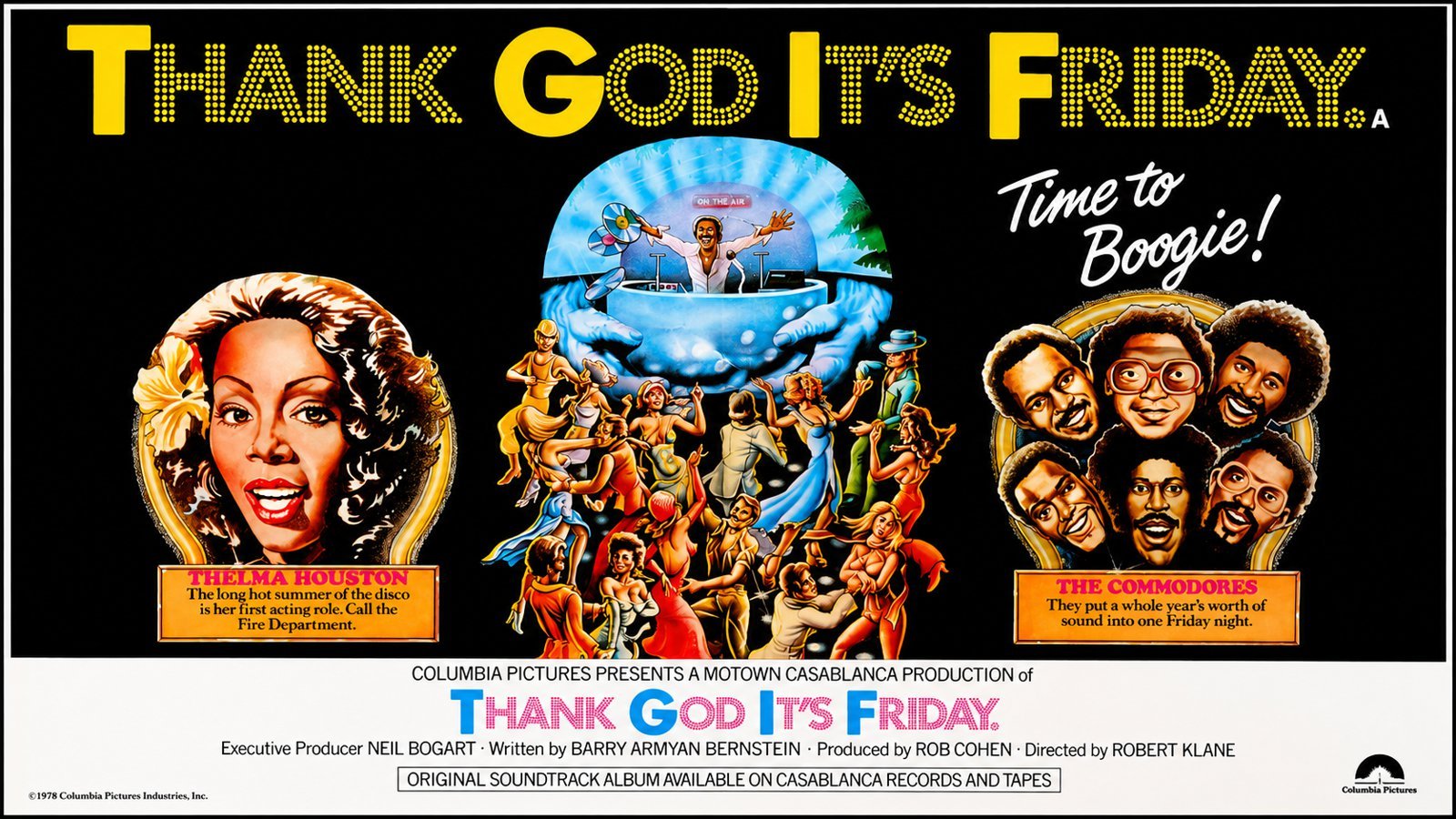
Thank God It’s Friday (1978)
Cast: Jeff Goldblum, Donna Summer, Debra Winger, Terri Nunn, Paul Jabara, The Commodores
Director: Robert Klane
Nutshell: A delicious transgender twist on the old Jekyll and Hyde tale, with Mr Hyde transformed into the murderously evil Sister Hyde.
“When you describe it, it sounds like a lot more fun than it is when you see it.”— Roger Ebert
“The movie isn’t as much fun as a night at a disco.”— Roger Ebert
“A disco movie that’s little more than a dismal record promotion.”— Gene Siskel
“More attention has been paid to the display of records than people.”— Gene Siskel
“Really a record album with live-action liner notes.”— Vincent Canby, The New York Times
“90 aimless, alienating minutes.”— Gary Arnold, The Washington Post
“TV sitcom-pilot boors, half-wits and low-lifes.”— Gary Arnold
“A lively, zany, often crass, sometimes irresponsible but surpassingly good-natured movie.”— Kevin Thomas, Los Angeles Times
“Forgettable ’70s musical fluff.”— Steve Crum, Video-Reviewmaster
“A light-weight, high energy slice of disco promotion.”— Eddie Harrison, Film Authority
“Perhaps the worst film ever to have won some kind of Academy Award.”— Leonard Maltin
1978 was synonymous with Studio 54, Chic, Donna Summer, Sister Sledge, Sylvester, Blondie, Earth, Wind & Fire, Kool & the Gang and disco music was the soundtrack to an era when Gay, Black and inner-city culture rose from the clubs and onto the pop charts all over the world. Chic urged everyone to “Everybody Dance” and everybody did indeed flock to the discos that speckled every major city from East to West, dancing until the early hours to the thumping sounds of the pumping disco beat.
The phenomenal success of Saturday Night Fever had taken what was largely a Black, Latin and Gay subculture and introduced it to white mainstream audiences. Suddenly the rich, famous and beautiful were all heading to the local disco, which effectively served as the Tinder or Grindr of its day. You dressed yourself in your finest disco gear, most of it horrendously embarrassing by modern standards, slipped on your dancing shoes and proceeded to make a total fool of yourself on the dance floor. Yet in the late 70s the disco was the place to be seen, the place to strut your stuff and, most importantly, the place to pull. It became a way of life, exemplified by the rise and rise of Studio 54.
The disco boom also gave many flagging soul, funk and R&B artists a second wind. Record companies rushed them back into the studio to record songs with a pumping dance beat in the hope of cashing in on the latest craze. Some succeeded magnificently, others didn’t, but this was unquestionably the moment for soul, funk and R&B artists to come to the party. Guiding many of them were superstar producers, none more influential than Nile Rodgers and Bernard Edwards of Chic, whose trademark sound helped define the era.
It was during this boom period that Motown Records, enjoying its greatest success since the golden age of the 1960s, joined forces with Casablanca Records, home to disco’s brightest star Donna Summer along with artists such as Cameo and the heavily marketed phenomenon known as Kiss. The two companies decided to take a crack at the lucrative soundtrack and cinema market by producing a disco movie featuring many of their artists and backing it up with an accompanying three-record soundtrack album.
Ironically, the soundtrack proved far more successful than the film. It reached the Billboard Top Ten and even produced an Academy Award winner in Donna Summer’s magnificent Last Dance, written by Paul Jabara. The movie itself failed to make much of an impact and, thankfully, the disco movie craze soon began to fade away before being replaced by the breakdance, freestyle and early hip-hop films that would arrive in the early 1980s.
The action of Thank God It’s Friday revolves around a fashionable Los Angeles disco called The Zoo, a nightclub clearly intended to evoke comparisons with Studio 54. Everyone is desperate to get inside. Alongside the beautiful people are a collection of exceedingly square white suburbanites hoping to loosen up from their painfully boring routines. Then there are the assorted lovable losers who all believe they will somehow discover magic, romance or success within the walls of The Zoo.
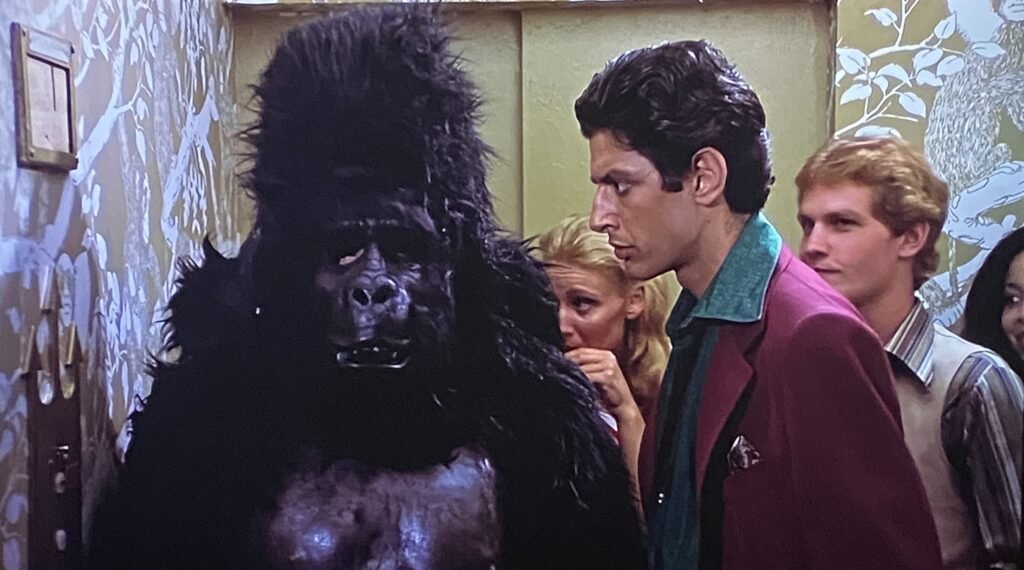
Some characters are competing in a dance contest while Donna Summer, playing aspiring singer Nicole, hopes to land her big break by performing for the crowd. There is also the disco owner, a slick Romeo greaseball who spends most of the film with women swooning over him. The film attempts humour throughout, but much of it is painfully imbecilic and often resembles a particularly bad disco-themed episode of The Love Boat. One of the more notorious examples is a “Leatherman” character whose sole ambition appears to be winning the dance contest and demonstrating his supposedly extraordinary dancing skills. Unfortunately, he amounts to little more than another tired stereotype squeezed into an already overcrowded film.
The music provides some compensation. The Commodores contribute the sizzling Brick House as well as the superbly funky Too Hot ta Trot, which remains one of the highlights of the entire production. Sadly, both songs are wasted through dull and unimaginative presentation. Ultimately, only Donna Summer’s Last Dance truly survives as the standout sequence. Remove those few musical highlights and what remains is one of the most staggeringly awful cinematic experiences of the disco era, standing shoulder to shoulder with Can’t Stop the Music as a monument to incompetence.
Among the cast are Debra Winger and Jeff Goldblum, both of whom would soon move on to considerably bigger and better things. As for this supposed “Disco Classic”, it is anything but. One of its lowest moments is a shameless plug for Casablanca Records’ own product, Kiss, who appear looking like a cross between a marketing gimmick and a rejected Spinal Tap sketch. That they went on to sell millions of records remains one of history’s more remarkable triumphs of promotion over substance.
Oddly enough, the film’s best moment arrives within the first ten seconds. The famous Columbia Pictures lady suddenly begins swaying and shimmying to a disco beat before the nightmare properly begins. The disco era produced some truly legendary cinematic turkeys and Joan Collins’ The Stud and The Bitch must also rank among the dregs of film history, battling it out for the title of worst disco-related movie ever made.
Thank God It’s Friday is a genuinely painful and cringe-inducing experience, recommended only to those hardy souls who found enjoyment in Can’t Stop the Music. Personally, I shall forever regret my wayward youth, during which I actually paid good money to watch both films during their original theatrical runs and somehow lived to tell the tale. I even bought a pair of satin trousers at one point, although thankfully I never summoned the courage to wear them in public.
The truth is that I loved disco. I loved soul and funk. I loved Donna Summer, Cameo and much of the music that emerged from that wonderful period. Looking back, however, I am still grateful that the disco movie craze died a swift death, even if disco itself never really did.