
The Hot Spot Rating
Title: Visiting Hours (1982)
Cast: Lee Grant, William Shatner, Michael Ironside
Director: Jean-Claude Lord
Nutshell: uninspired slasher fare that inexplicably got banned during the Video Nasties era.
“A routine stalk-and-slash thriller.”— Variety
“The suspense is minimal.”— Variety
“Michael Ironside gives a chilling performance.”— The Monthly Film Bulletin
“An efficient but uninspired thriller.”— Time Out Film Guide
“Too slow and too predictable to generate much excitement.”— TV Guide
“An oddly respectable slasher film.”— Video Watchdog
“A curious blend of exploitation and social commentary.”— Video Watchdog
“A surprisingly intelligent premise that never fulfils its potential.”— Moria Reviews
“Michael Ironside is easily the best thing in the movie.”— Moria Reviews
“A slasher film trapped inside a television movie.”— DVD Verdict
“Competently made but lacking in suspense.”— Radio Times
“Fails to exploit its hospital setting to any great effect.”— Radio Times
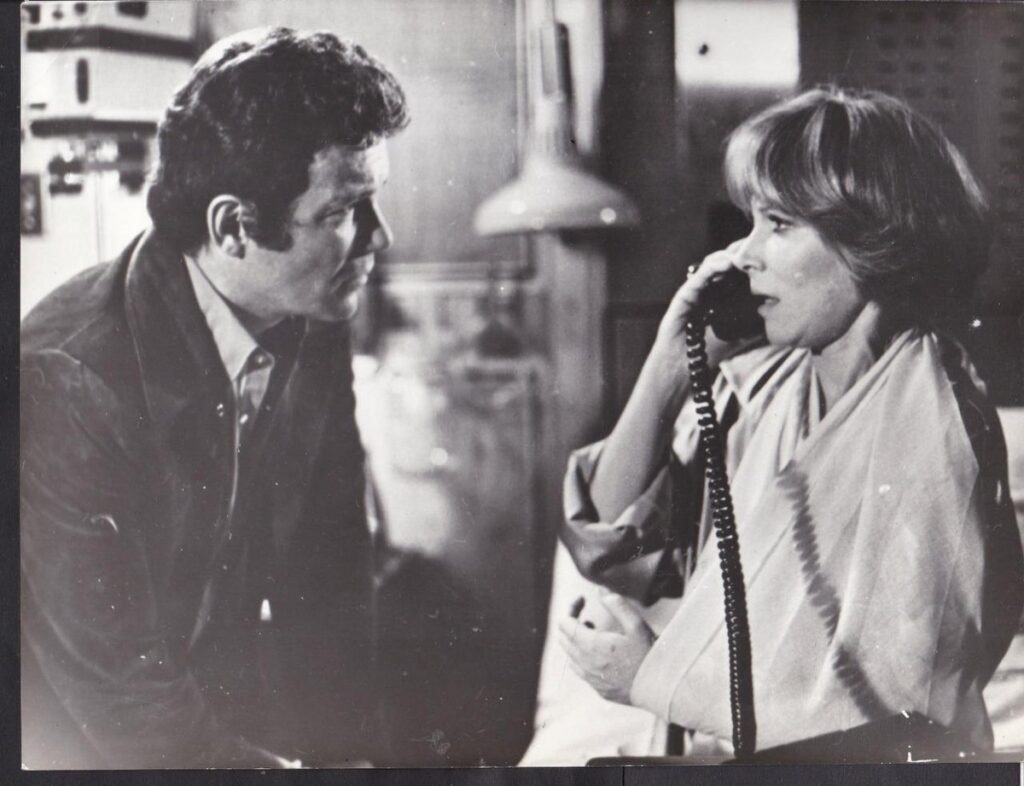
Lee Grant plays a feisty feminist television reporter determined to tell it like it is, regardless of whose feathers she may ruffle in the process.
Elsewhere, in a grim fleapit apartment hidden away somewhere in a particularly ugly urban wasteland, a troubled young man spends his days caring for his elderly father while simmering with barely concealed rage. Covered in piercings, permanently scowling and constantly squeezing rubber balls whenever frustration overwhelms him, he appears to be carrying enough emotional baggage to fill a cargo ship.
His favourite pastime is writing furious complaint letters to newspapers, radio stations and anyone else unfortunate enough to read his endless grievances.
The film repeatedly reminds us that our killer is deeply damaged. Through flashbacks we see his father behaving inappropriately towards him and brutally beating his mother on numerous occasions. The director lays the psychological trauma on with a shovel, leaving little doubt that this tortured upbringing is supposed to explain why he now targets innocent women.
The problem is that it doesn’t make much sense.
The figure who terrorised him throughout childhood was clearly his father. His mother, by contrast, appears more victim than villain. Yet somehow the film expects us to accept that witnessing domestic abuse has transformed him into a misogynistic killer driven by hatred towards strong, independent women.
It is psychology by way of a sledgehammer and not especially convincing psychology at that.
The story begins when the killer becomes enraged by Lee Grant’s outspoken views regarding violence against women. So offended is he by her opinions that he immediately decides to murder her.
He attacks her in her own home and very nearly succeeds, but she escapes with her life and is rushed to hospital suffering from serious injuries.
This minor setback does little to discourage our determined stalker.
Disguising his van as a flower delivery vehicle, he heads for the hospital intent on finishing what he started.
During surgery, the heavily sedated Lee Grant briefly believes she recognises her attacker amongst the doctors and medical staff surrounding her. Although she survives the operation, others are not so fortunate.
Before long, nurses and patients begin dying under mysterious circumstances. Eventually the authorities realise they are dealing with a spree killer willing to slaughter anyone standing between himself and his ultimate target.
The hospital soon becomes the setting for a deadly game of cat and mouse as the killer closes in and Grant desperately searches for ways to stay alive.
Released in 1982, Visiting Hours arrived at precisely the moment when the slasher boom was reaching its peak. Audiences had already become familiar with the genre’s tricks and expectations had risen considerably.
By this point filmmakers faced a simple choice.
Either bring genuine style, suspense and invention to the material, or compensate by delivering increasingly outrageous gore effects.
Directors such as John Carpenter excelled through atmosphere and visual flair. Effects artists such as Tom Savini stunned audiences through elaborate and inventive death scenes.
Visiting Hours does neither.
Despite backing from a major studio and the presence of respected actors such as Lee Grant and William Shatner, the film completely misunderstands what makes a slasher movie work.
There is virtually no suspense.
No memorable set pieces.
No atmosphere.
No visual personality whatsoever.
The film unfolds with all the excitement of an overlong television crime drama and often resembles a particularly uninspired episode of some forgotten detective series from the 1970s.
The pacing is glacial.
The direction is lifeless.
The tension simply never materialises.
Again and again the film presents opportunities for suspense, only for the director to let them drift by unnoticed.
Lee Grant spends much of the running time looking understandably bored, William Shatner appears to be collecting a pay cheque, and Michael Ironside, despite his best efforts, is unable to overcome the limitations of the material. Rather than appearing frightening, he often looks like a perpetually constipated man having a very bad day.
The gore, meanwhile, is almost non-existent.
What little violence does occur is staged with such awkwardness that it often appears as though the killer is stabbing a pillow rather than anything remotely resembling human flesh. Even by early-1980s standards the effects are remarkably unconvincing.
Ironically, the most interesting thing ever to happen to Visiting Hours may have been its inclusion on the infamous British Video Nasties list. That controversy undoubtedly brought the film far more attention than it would otherwise have received.
Without the Video Nasty connection, one suspects it would have disappeared almost entirely from public memory.
Even for committed slasher fans there is very little here to become excited about. The film delivers no memorable scares, no notable suspense sequences, no particularly inventive kills and no meaningful surprises.
It simply drifts along from one uninspired scene to the next until it finally expires.
Visiting Hours remains a particularly tedious example of the slasher genre and despite its respectable cast and studio pedigree, offers virtually nothing to recommend it.
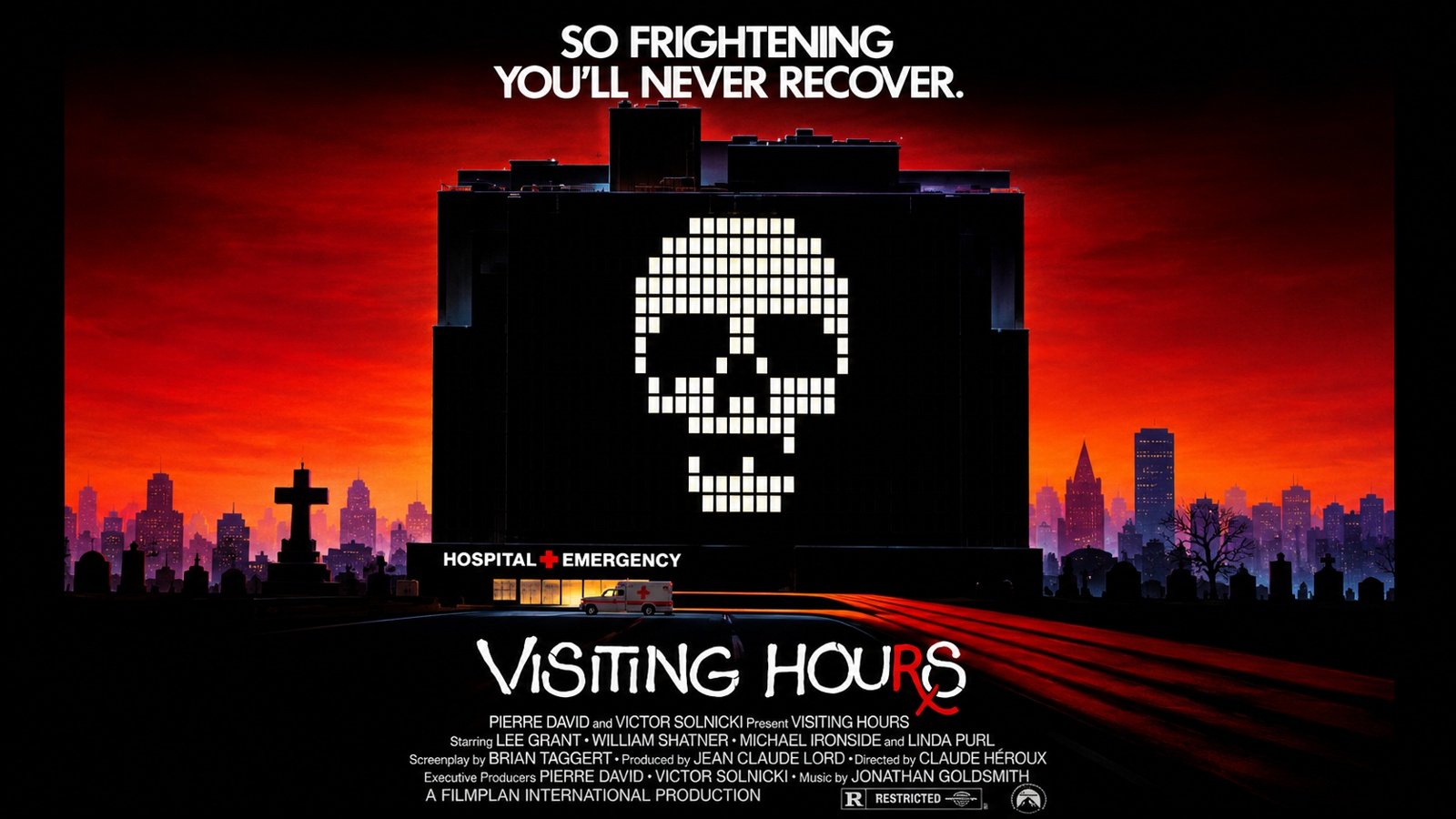
A dull, lifeless and thoroughly forgettable exercise in missed opportunities. The tag line on the poster should have read “So Boring, You’ll Never Recover”.