
The Hot Spot Rating
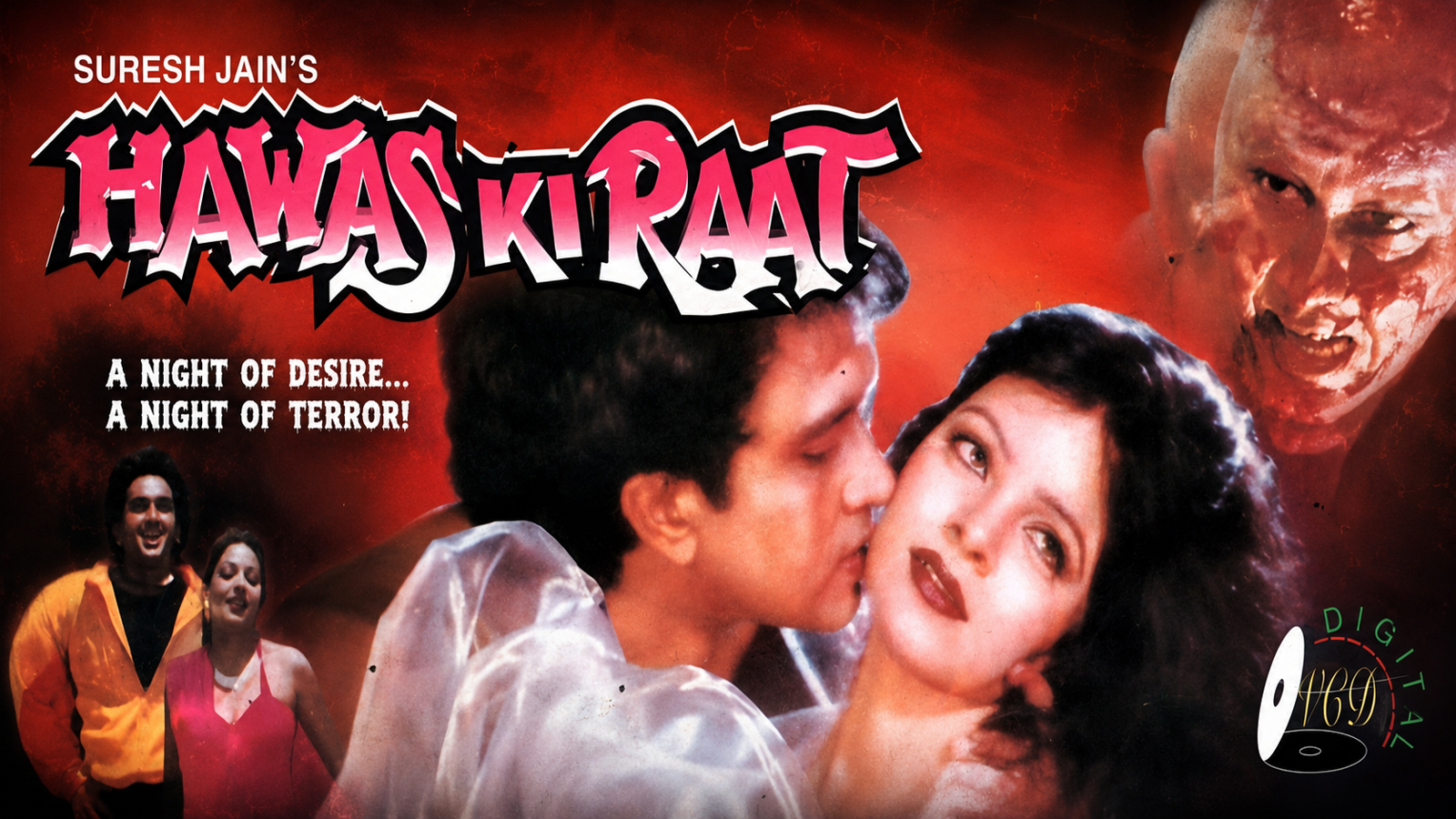
Hawas Ki Raat (2000)
Cast: Jeet Upendra, Satnam Kaur, Shahnawaz, Prabhat, Iqbal Bhai, Sweety
Director: Kailash Churi
Nutshell: A sleazy sexploitationer cleverly camouflaged as a socially relevant protest movie. Nice try.
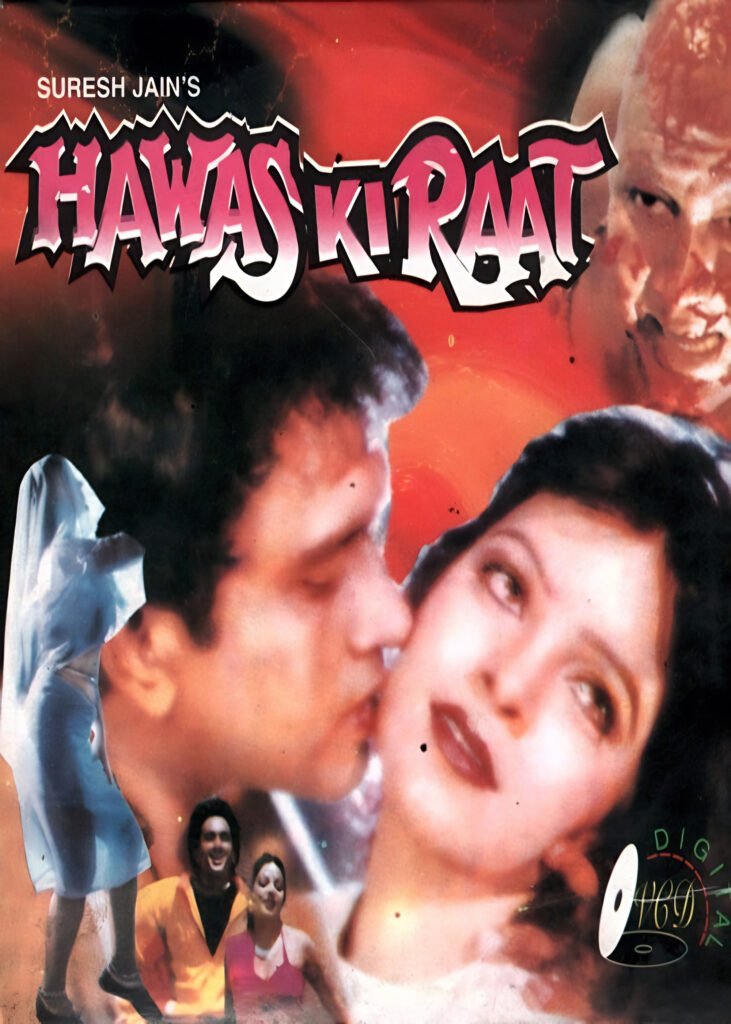
Hawas Ki Raat revolves around a family trapped within the dreadful and archaic Devdaasi custom, a system that sexually exploits women under the guise of religious tradition. The village Mukhya, aided and abetted by the local Swami, satisfies his lustful appetites by forcing young women into symbolic marriages with crude effigies supposedly representing “God”. In reality, the women become concubines with no right to choose husbands or live lives of their own. It is a barbaric and inhuman custom that has existed in parts of South Asia despite being outlawed officially.
The film opens with the luscious and carefree Maya frolicking by a stream with her friends while washing clothes. Their playful mood is interrupted by four village louts tied to the Mukhya, who begin harassing the women. The girls manage to fend them off temporarily, but they warn Maya that her free-spirited behaviour is bound to invite trouble in a village where the Mukhya’s word carries far more weight than any court of law.
Meanwhile, a handsome young man named Shyam returns to the village to visit his parents, and his arrival immediately causes ripples. Shyam plays the bansuri beautifully, and the lilting tunes have an intoxicating effect on Maya, who quickly falls hopelessly in love with him. Romance soon blossoms between the pair, much to the irritation of the local thugs, who also have their eyes firmly fixed on Maya. This naturally leads to confrontation and eventually a marvellous fight sequence in which Shyam takes on a gang of stick-wielding villains armed with nothing more than his puny little flute, though he acquits himself remarkably well under the circumstances.
Elsewhere, Maya’s mother appears to spend her evenings “servicing” the Mukhya and the Swami after having herself once been forced into marriage with an effigy. Whenever the two old degenerates require gratification, she is summoned like property and has little choice but to comply.
Unfortunately, the Mukhya is growing increasingly dissatisfied with his ageing concubine and begins searching for fresher alternatives. Naturally, his wandering eyes settle upon the bodacious Maya. Both he and the Swami are deeply irritated to discover that Maya is already in love with Shyam and intends to marry him. A plan is therefore hatched to force Maya into one of the village’s grotesque ceremonial marriages before Shyam can get to her first.
Shyam, however, is outspoken and fearless. He openly condemns the vile practice of enslaving women through forced marriages to effigies and publicly denounces the custom during a village gathering. Sadly, the villagers are too terrified of the Mukhya to support him, leaving Shyam isolated and hopelessly outnumbered.
As preparations begin for Maya’s marriage to an especially shabby-looking mud effigy, the young lovers decide to flee the village and take control of their own fate. Foolishly, however, instead of immediately making their escape, they waste valuable time singing and dancing together around the village like all doomed Bollywood lovers eventually do. Word soon reaches the Mukhya, who moves swiftly to crush their plans.
His thugs brutally murder Shyam just as the couple are preparing to flee. Maya is then gang-raped, stabbed, and left for dead in the woods.
The Mukhya is frustrated that he never personally got his claws into Maya but pleased by news of Shyam’s demise. The Swami reassures him that suitable replacements can always be found. Soon afterwards, however, a mysterious shadowy figure begins slaughtering the Mukhya’s men one by one in increasingly gruesome fashion. Panic spreads rapidly as the body count rises and the Mukhya’s support system begins collapsing around him.
Although many of the murders frustratingly occur off-screen, there are still some wonderfully ridiculous moments of carnage. Eventually the avenging force turns its attention to the Swami himself, with the chubby holy man meeting a satisfyingly brutal end when his head is smashed repeatedly against the bells of his own temple.
Now genuinely terrified, the Mukhya realises he too is marked for destruction. Before long, his turn arrives and he is dispatched by the same relentless force of vengeance.
The film closes on a bittersweet note. Bitter because Maya and Shyam’s romance never had the chance to fully blossom, yet satisfying because the monstrous cycle of exploitation and forced bondage finally comes crashing down with the deaths of the Mukhya and his accomplices. The identity of the mysterious avenger also provides a neat final twist.
Hawas Ki Raat plays out very much like the average low-budget Bollywood horror potboiler, with rape-and-revenge elements taking centre stage throughout. The film cleverly masks much of its sleaze beneath the pretence of delivering a social message. Add a few rubber monsters and supernatural gimmicks and it would barely differ from dozens of desi horror films churned out during the same era.
In many ways it is essentially I Spit On Your Grave given a desi village melodrama makeover. Yet despite all this, the film is strangely watchable and considerably less dull than the synopsis might suggest. It was clearly aimed squarely at the famous “morning show” crowd — audiences who traditionally flocked to early screenings in search of cheap thrills, horror, sleaze and gratuitous flesh before the respectable evening crowds arrived.
Throughout much of India, it was often the morning show rather than the late-night screening where the truly disreputable material surfaced, and Hawas Ki Raat fits that category perfectly.
The film itself is fairly run-of-the-mill stuff overall, though at least it attempts to attach some sort of social commentary to the endless exploitation. Satnam Kaur is spirited and appealing as Maya, while Shyam huffs and puffs admirably in the heroic department. The Mukhya and his evil Swami perform their sleazy duties competently enough.
As for what the target audience really paid to see, the film delivers exactly that in the form of gang rape scenes, sleazy encounters with the ageing concubine, heavy petting, and considerable quantities of exposed flesh — more than enough to satisfy the least discerning ticket-buying punter.
Hawas Ki Raat is pure morning-show sleaze fodder, the sort of film that once thrived in grimy cinemas before disappearing almost entirely into obscurity.