
The Hot Spot Rating
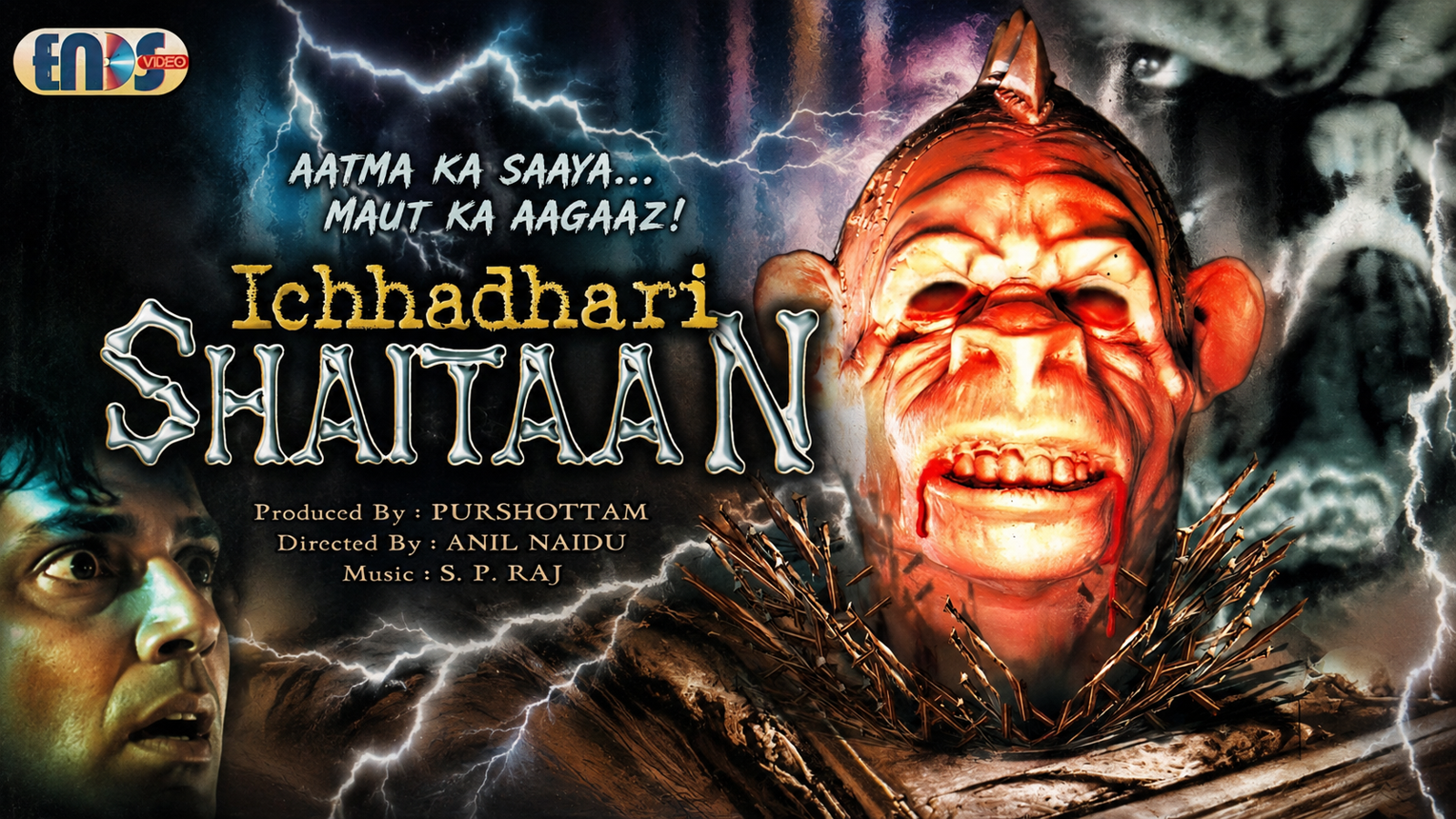
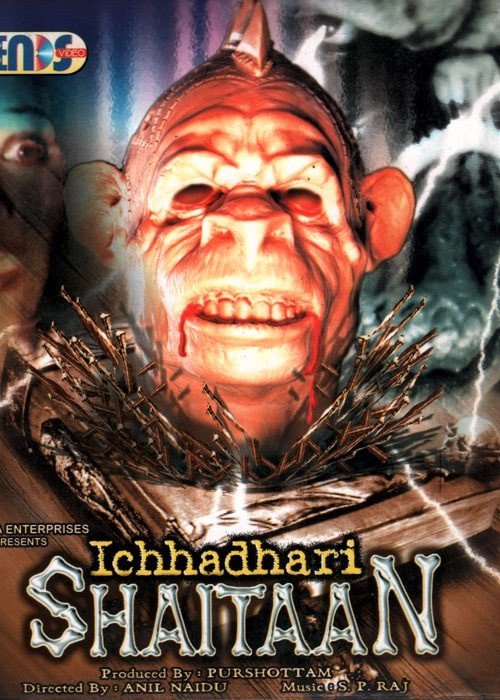
Ichhadhari Shaitaan (2000)
Cast: Shobraj, Krishna, Babu, Nagraj, Raju, Manjanna
Director: Anil Naidu
Synopsis: Yet another zero-budget shocker taking its cue from The Evil Dead and co.
Another zero-budget piece of sleazy rubbish hailing from the South — fertile ground indeed for horror trash during this era — Ichhadhari Shaitaan concerns a group of suspiciously middle-aged “teenagers” heading into the jungle to research local tribals for what is supposedly their thesis work. Yeah, right.
The elderly-looking students bounce merrily along in a jeep singing songs and engaging in the kind of moronic banter usually associated with 30-year-olds who have somehow still not graduated. Naturally, their jeep breaks down in an improbably scenic location complete with a waterfall, giving the girls an immediate excuse to frolic in the water while the cameraman zooms lovingly toward the wet, clinging garments of the rather lumpy beauties.
Back on the road, spirits remain high until the group is suddenly ambushed by some deeply hostile spear-wielding natives behaving in a most unreasonable fashion. A huge fistfight erupts, with the burly “students” holding their own admirably against the scrawnier tribesmen. Eventually, the bloated group leader pulls out what appears to be a pistol, at which point the natives suddenly become wonderfully cooperative, clearly understanding the persuasive power of firearms.
Meanwhile, one bulbous beauty has been dragged away by eager natives who begin smearing her with some vile black tar-like goo, strongly suggesting that she is destined to become supper by nightfall. However, after regaining consciousness, she merely kicks her captors aside and flounces straight back into the jungle in search of her imbecilic research companions.
Order is temporarily restored and the natives escort the group to a crumbling old haveli that will serve as their residence while they conduct their “research,” though judging from their behaviour, lust appears to be the only field of study on anyone’s mind. Before long, endless scenes of sweaty heavy petting and vigorous flesh-rubbing commence, all of it thoroughly unsavoury. One finds oneself desperately wishing the threatening demonic force, indicated ominously by a wandering point-of-view camera, would stop lurking around and finally get on with murdering people.
Eventually, the evil spirit does strike. One of the girls, Ruby, settles down to write a love note to one of the lads she fancies desperately. Suddenly an eerie wind begins to howl through the haveli and, for reasons best known to the screenplay, Ruby becomes compelled to wander deep into the jungle searching for God knows what.
What follows is one of the film’s most notorious sequences. Ruby is attacked by demonic vines and branches that force her to the ground and proceed to “rape” her for what feels like an eternity before finally leaving her bloodied and broken in the forest.
Naturally there is much sobbing and dramatic wailing when her companions discover the body. Soon afterwards, one of the boys sitting in the same room where Ruby wrote her note experiences another supernatural attack. In what may secretly be the film’s greatest anti-smoking campaign, the cigarette he is puffing on suddenly erupts like a miniature mushroom cloud, sending him fleeing into the jungle in blind panic.
The poor fool is eventually engulfed in flames, though somehow survives long enough to return later performing head-spinning antics that would make Regan from The Exorcist proud. Even more wonderfully absurd is the sight of the burning cigarette itself apparently chasing him through the jungle like a tiny fiery assassin.
Later another member of the brain-dead research team, Bhavna, suffers a similar fate when she flees the haveli in terror only to be pursued and eventually overpowered by the same unseen rapist vines. The scene drags on endlessly, with much sweating, writhing and point-of-view camerawork that perversely places the audience directly into the position of the unseen attacker. It is deeply unpleasant and unmistakably designed purely for sleazy voyeuristic effect.
Finally, the surviving intellectual giants seek assistance from the local Tantrik. Unfortunately for them, the audience already knows that this sinister old fraud is himself thoroughly evil. He worships the stone idol of the Ichhadhari Shaitaan and dreams of offering innocent victims as sacrifices in pursuit of world domination — yes, really.
Pretending to help the traumatised Bhavna, the Tantrik revives her from her deathlike state to the delight of her friends. Sadly for them, she now has rather different priorities and soon becomes a deadly servant of the Tantrik’s deranged ambitions.
So the question becomes whether the Tantrik will succeed in building an undead army from his forest-ravaged beauties or whether the remaining “researchers,” led by their inflated buffoon of a leader, will somehow derail his plans. To be fair, they do possess a magical stone bearing the head of the Ichhadhari Shaitaan itself, which may yet prove useful once things become properly ridiculous.
Directed by the virtually unknown Anil Naidu, Ichhadhari Shaitaan embodies everything associated with bargain-basement 1990s Bollywood horror. The film stretches the limits of cheapness to almost supernatural levels. It resembles an amateur home video more than a proper motion picture, and the acting is catastrophically awful, though the script hardly gives anyone a fighting chance.
There is not even half a genuine scare to be found anywhere, and perhaps the film’s most terrifying aspect is the dreadful Hindi dubbing. Yet despite all this — or perhaps because of it — Ichhadhari Shaitaan achieves a strange sort of hypnotic ineptitude.
It is a staggeringly incompetent film, entirely representative of about 95% of the horror output emerging from Bollywood throughout the 1990s and beyond. Once again, nonsense like this somehow manages to make the old Ramsay productions of the 1970s and 80s look positively classy by comparison.